Quick Links
GCFI79 – Curaçao
Key Dates
Key Deadlines for GCFI79
- Deadline for Submitting Proposals for Special Sessions and Workshops: April 30
- Deadline for Submitting Abstracts: Extended to July 15
- Deadline for Submitting Student Award Applications: Extended to July 15
- Deadline for Submitting Nominations for Gladding Memorial Award: Extended to July 20
- Deadline for Submitting films for CINEFISH Film Festival: September 1
- Early Bird Registration Ends: September 30
- Deadline for booking accommodation: October 5
- Deadline for uploading posters: October 23
- Deadline for uploading presentations: October 23
About
About the Conference
 GCFI is pleased to announce that the 79th Annual Meeting of the Gulf and Caribbean Fisheries Institute (GCFI79) will be held in Curaçao from 2 – 6 November, 2026.
GCFI is partnering with the Government of Curaçao, Federashon Kooperativanan Uní di Produkshon (FKUP), Fundashon Ekonomia Sosial Kòrsou (FESK), Piskabon Bonaire, and the Caribbean Cetacean Society (CCS) to host GCFI79.
GCFI79 is an Endorsed Decade Activity with the United Nations Decade of Ocean Science for Sustainable Development
Conference Theme
Conference Theme
The theme for the Conference is Future-Proofing Fisheries: Resources, Resilience, and Tradition
Future-Proofing Fisheries calls for a forward-looking, solutions-oriented approach to ensuring that Caribbean fisheries can withstand environmental, economic, and social pressures while continuing to provide food security, livelihoods, and cultural identity. It recognizes that sustainability is no longer just about conservation, it is about adaptation, innovation, and inclusive governance. The three pillars: Resources, Resilience, and Tradition, represent interconnected priorities.
Conference Venue & Hotel
VENUE
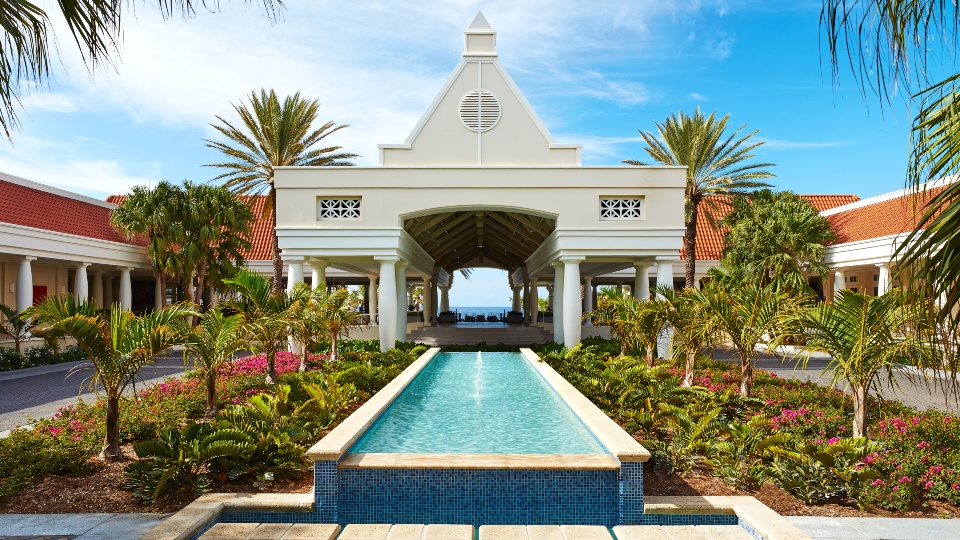
The venue for GCFI79 will be The Curacao Marriott Beach Resort which is located at John F Kennedy Boulevard, 3, Piscadera Bay, Willemstad, Curacao. The Curacao Marriott Beach Resort is considered the most luxurious beach resort in Curacao. The resort reopened in 2019 after 3 years of renovation, which is also well reflected in the results. Beautiful and spacious rooms, and gorgeous swimming pool with lovely sunbeds around it, upscale restaurants and stylish bars. A modern gym, a colorful kids club and also modern meeting rooms for a business visit.
The resort is centrally located on the west side of Willemstad: within minutes (by car) you are in the middle of the historic center of Willemstad. But if you go the other way, quickly you are on the road to the many beautiful bays along the southwest coast.
The standard GCFI79 room block at the Curaçao Marriott Beach Resort is now SOLD OUT.
A limited number of higher-priced rooms and suites remain available at the conference hotel.
The good news is that there are still several more affordable accommodation options:
- Curaçao Sea Aquarium: Lower-cost accommodation is available ($30/night), including 2 rooms with shared bathroom and kitchen facilities, 4 rooms with a shared kitchen, and 2 fully private rooms. Please note that this location is farther from the conference venue, and renting a car would be required. For bookings and further information, contact [email protected].
- Merakii Sea View Escape – 3 min drive: A small number of suites are available at approximately US$140 -180 per night. Website Link <https://www.merakiicuracao.com/?lang=en>
- Courtyard by Marriott Curaçao – 5 min drive: Rooms are available at approximately US$175 per night. Website Link <https://www.marriott.com/en-us/hotels/curcy-courtyard-curacao/overview/>
Take A Virtual Tour
Discover the incredible resort from the comfort of your device. Take a quick 360 tour of the resort and experience what you’ll see when you stay for GCFI79. Take the tour
GCFI79 Logo Story
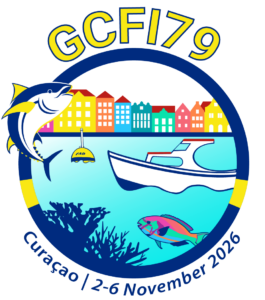
The Story Behind The GCFI79 LogoThe circular emblem is framed in the colors of Curaçao’s flag — deep blue with a bright yellow band — anchoring the design firmly in the host island. Rising along the shoreline is the iconic ‘Handelskade,’ Willemstad’s brightly colored waterfront, placing our gathering instantly and unmistakably in Curaçao. The bright colors reflect our rich and colorful culture.
A traditional fishing boat sits at the heart of the design. A vessel familiar across Curaçao, Aruba, and Bonaire, and a tribute to the generations of fishers whose knowledge and livelihoods sustain our coastal communities. Beside it floats a FAD (Fish Aggregating Device), representing the innovation and forward-looking advances shaping the future of our fisheries. The tuna, one of our target species, carries a message of its own: that fishing practices are gradually shifting away from the reef toward more pelagic waters. Together they represent the need to keep traditions with the help of innovation.
Below the surface, the reef tells its own story. A parrot fish swims among staghorn and elkhorn corals: the islands’ most important reef-building species and the focus of ongoing coral restoration efforts across Curaçao. Vital to the health of these reefs, the parrotfish represents an important conservation milestone that will be announced at the conference.
The logo was designed by Ashanti Raphaela; born and raised in Curaçao and a marine biologist herself
Registration
Registration
| GCFI79 Registration Rate: Members | In-Person (USD) | Virtual (USD) |
| Early Bird – Regular Registration | 375 | 175 |
| Early Bird – Student/Fisher Registration | 185 | 75 |
| After Sep 30 – Regular Registration | 500 | 225 |
| After Sep 30 – Student/Fisher Registration | 225 | 125 |
| On-site regular | 650 | N/A |
| On-site student | 350 | N/A |
| GCFI79 Registration Rate: Non Members | In-Person (USD) | Virtual (USD) |
| Early Bird – Regular Registration | 550 | 275 |
| Early Bird – Student/Fisher Registration | 250 | 150 |
| After Sep 30 – Regular Registration | 675 | 325 |
| After Sep 30 – Student/Fisher Registration | 350 | 200 |
| On-site regular | 775 | N/A |
| On-site student | 425 | N/A |
If you cancel your attendance for GCFI79 more than 60 days before the conference (by September 2, 2026), you will receive a full refund minus a 10% processing fee.
Cancellations made between 60 and 20 days prior (September 2–October 12, 2026) will receive a 50% refund of the registration fee.
Cancellations made less than 20 days before the conference begins (after October 12, 2026) are non-refundable.
Abstract Information
Call for Abstracts
The deadline for abstract submissions for GCFI79 has been extended to July 15, 2026. Abstracts will be accepted in English, French, and Spanish. Abstracts are only required in one of the three languages; titles must be in all three languages. Abstracts must not exceed 250 words (275 for Spanish and French). Abstracts must be submitted online via the secure online Abstract Submission Form.
Acceptance to present within an oral or poster session requires submission of an extended abstract. Extended abstract preparation guidelines are available online. Members of GCFI are encouraged to submit full manuscripts or short communications based on presentations given at GCFI meetings to Gulf and Caribbean Research for peer review. Accepted manuscripts will be published open access at no charge to the authors through the GCFI-GCR partnership. Full manuscripts will also be accepted for publishing in the GCFI Proceedings.
Authors of accepted presentations will be notified via e-mail. Submissions intended for the oral presentation, but not granted a slot, would automatically be accepted as a poster presentation. Regardless of the format, we encourage everyone who is interested in participating to submit an abstract.
Abstracts for GCFI79 are due July 15, 2026.
Technical Sessions
Technical Sessions
The conference program features multi-disciplinary thematic sessions. Each session may have a mix of natural and social science, management, and technology related to the ecosystem or fisheries, highlighting the conference theme. Papers and posters are invited in the following areas (other subjects not listed below will also be considered):
- Governance, livelihoods, and organizations
- Socio-economics
- Ecological and socio-economic impacts on the fisheries sector
- Cooperation in the Caribbean: Large and small actions, results, and challenges.
- Gender in fisheries
- Reefs and associated ecosystems fisheries
- Shallow and deep reef fishes
- Snapper and grouper fisheries
- Fish spawning aggregations
- Lionfish and other invasive species
- Queen conch, spiny lobster, and other invertebrates
- Marine protected areas science and management
- Pelagic ecosystem and recreational fisheries
- Continental shelf ecosystem fisheries
- Shrimp and demersal trawl fisheries
- Habitats, climate change, and coastal management
- Essential fish habitats
- Integrated coastal management
- Climate change science and adaptation
- Sargassum
- Aquaculture
- Marine litter/debris
- Science and Innovation
- UN Ocean Decade
Student Awards
Student Awards
Outstanding Student Achievement Award
GCFI is awarding $1,500 scholarships to the best oral and poster presentations. The content of the presentation is typically related to final research done by the student related to their thesis or dissertation. If the work is already completed and the student graduated, the thesis or dissertation must not have been defended prior to 1 November 2025. For students with “near complete” projects it is recommended that they should apply for an oral presentation for the award, while those students not quite as far along should apply for a poster presentation for the award. It is recommended that the research should be at least 50% complete in order to be eligible for the awards. Oral presentations competing for the award must be presented in-person at the conference. Virtual poster presentations are eligible for the award. The award winners will receive their scholarship at the following year’s conference, to help support their participation in this meeting. Complete instructions and eligibility requirements are on the Outstanding Student Achievement Awards web page.
GCFI Travel Awards
GCFI will offer two travel awards of US$1000 each to eligible students to help offset travel costs to GCFI79. The deadline for students to apply for this award is July 15, 2026. Complete instructions and eligibility requirements are on the GCFI Student Travel Awards web page. Students may apply for a travel award and for consideration for the Student Achievement Award in the same year. Students who received the GCFI78 Student Achievement Award are not eligible for a travel award.
Ron Schmied Scholarship
The Ron Schmied Scholarship, a GCFI initiative supported by the International Game Fish Association (IGFA) and private individuals, will be offered to a qualified graduate student in support of their travel to GCFI79. The Scholarship is in the amount of US$1,500, and graduate students with an interest in social, economic, biological, ecological, or management perspectives on recreational fisheries are eligible to apply. The deadline for students to apply for this award is July 15, 2026. Complete instructions and eligibility requirements for the Ron Schmied Scholarship are on the Ron Schmied Scholarship page. Students may apply for the Scholarship and for consideration for the Student Achievement Award in the same year. Students may also ask to be considered for the Ron Schmied Scholarship and a GCFI Travel Award in the same year but will only receive one award. The recipient of this scholarship must submit an extended abstract or manuscript based on their oral or poster presentation.
Dr Clarence P. Idyll Scholarship
The Clarence P. Idyll Scholarship, a GCFI initiative supported by the Devon Creek Foundation is in the amount of US$2,000 and aims to provide encouragement to the next generation of students interested in marine fisheries. Graduate students interested in any aspect of Marine Fisheries (biology, ecology, socioeconomics, management, aquaculture) who might otherwise not be able to attend the annual Gulf and Caribbean Fisheries Institute (GCFI) conference. are eligible to apply. The deadline for students to apply for this award is July 15, 2026. Complete instructions and eligibility requirements for the Dr. Clarence P. Idyll Scholarship can be found via this link. Students may apply for the Scholarship and for consideration for the Student Achievement Award in the same year. Students may also ask to be considered for the Dr. Clarence P. Idyll Scholarship and a GCFI Travel Award in the same year but will only receive one award. The recipient of this scholarship must submit an extended abstract or manuscript based on their oral or poster presentation.
Gladding Memorial Award
Gladding Memorial Award
As a component of the Fisheries for Fishers (F4F) Initiative, the GCFI Gladding Memorial Award (GMA) committee is requesting nominations of outstanding fishers for GCFI79. This annual award is presented to select fishers (male or females) who demonstrate, as Peter Gladding did, significant commitment to the sustainable use and long-term conservation of marine resources in the Gulf and Caribbean region. The winner will be sponsored to attend GCFI79 in Curaçao
You are invited to submit award nominations to the GMA committee at [email protected]. All nominations must be received by 20 July 2026 and nominators are welcome to request further information and guidance. Background information on the GMA, nomination forms with award criteria, and details of the process are available on the Gladding Memorial Award webpage.
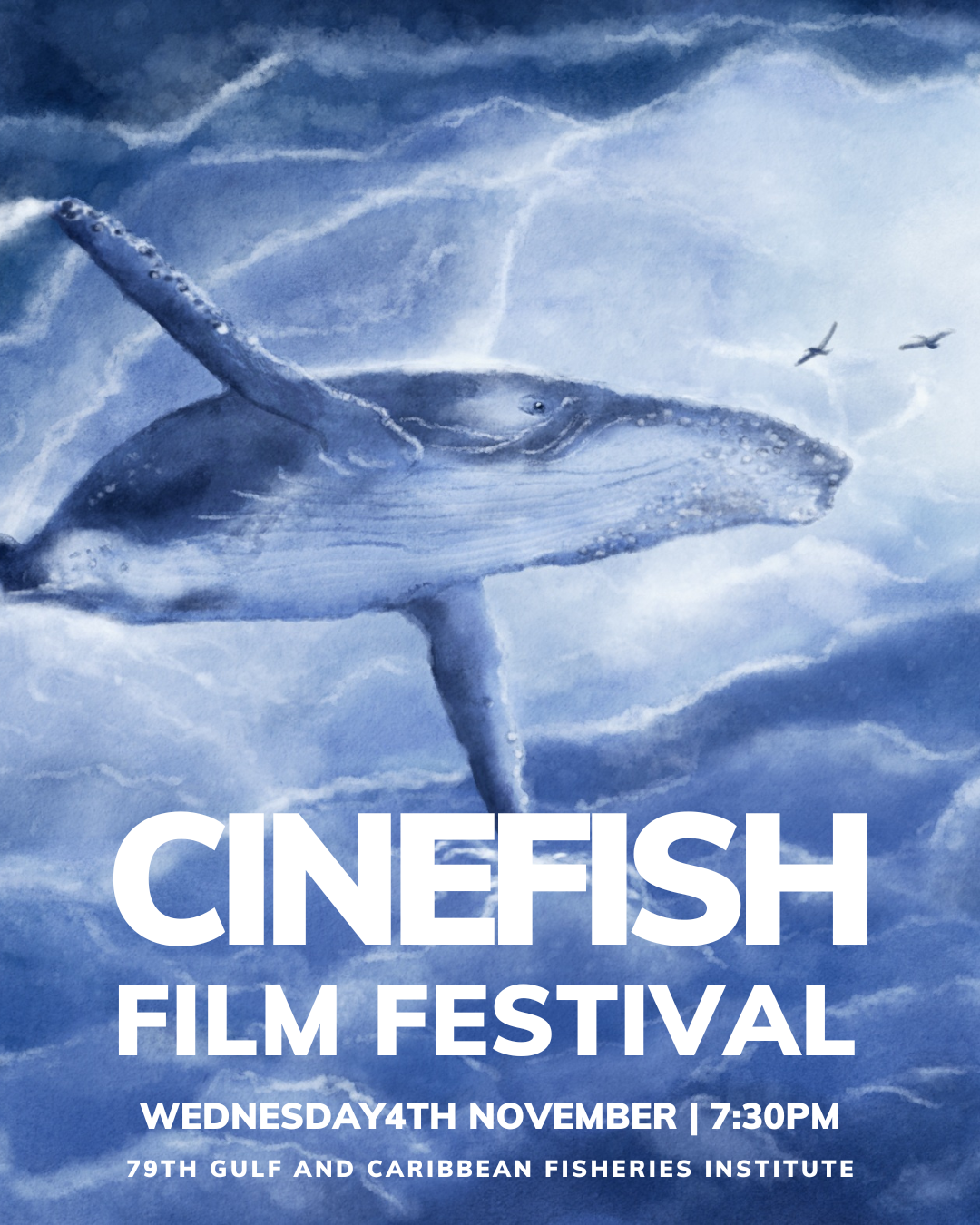
CINEFISH
CINEFISH Film Festival
The CINEFISH Film Festival aims to combine scientific discourse with artistic expression, using films to explore and communicate information about fisheries, conservation and marine life.
Check out this year’s films here:
Social Media
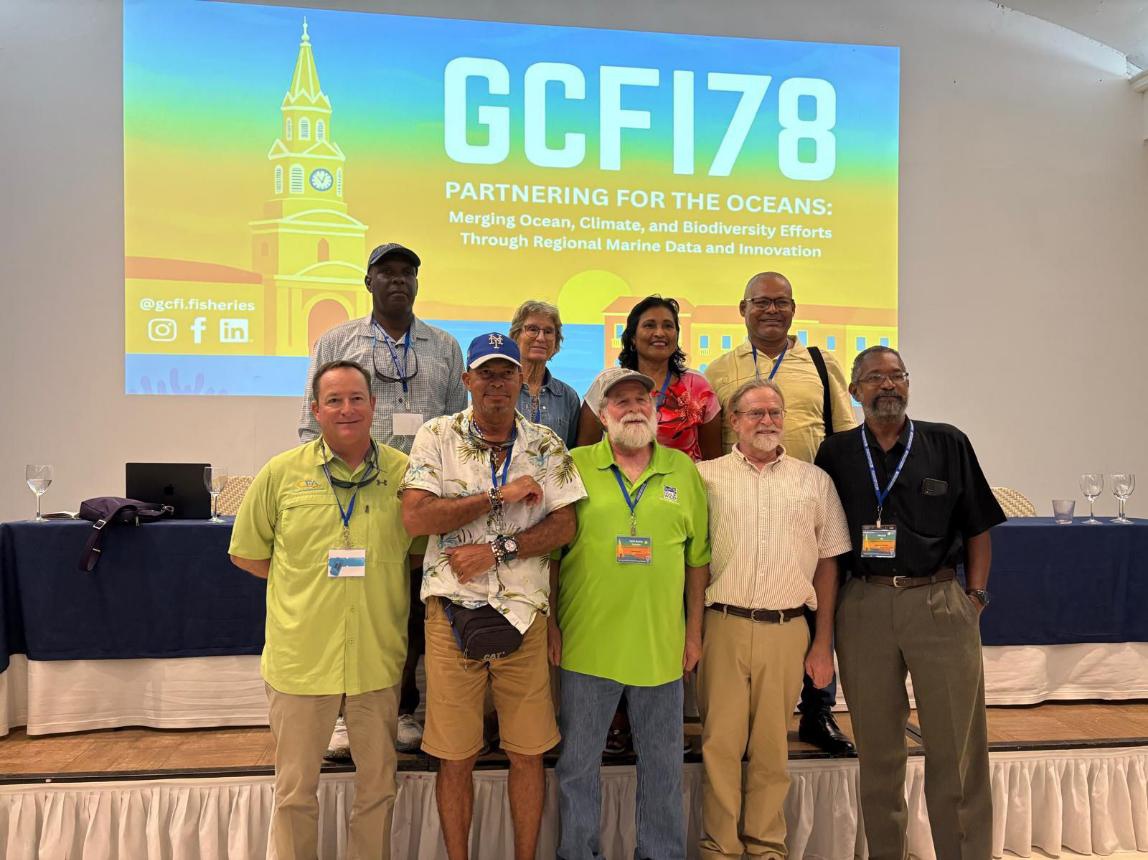
Exhibitors
Visas & Travel Insurance
Visas
Generally, tourists holding a valid passport may enter Curaçao without a written permit and remain with us for a period of maximum 30 consecutive days, with a maximum of 90 days in a 180-day period. Dutch and US nationalities are allowed to stay 180 consecutive days in any 365-day period.
However, several nationalities (e.g. Cuba, Haiti, Venezuela) must present a tourist visa as part of our entry requirements. A visa should be applied for at least one month in advance at any representation of the Netherlands (in the concerning country).
For more information on whether you need a visa, please visit: https://www.netherlandsworldwide.nl/caribbean-visa/visa-needed-caribbean
For more information on entry requirements, please visit: https://www.netherlandsworldwide.nl/caribbean-visa/travel-without-visa
Travel Insurance
For your convenience and peace of mind while attending GCFI79 in Curaçao, we strongly recommend purchasing travel insurance, especially considering potential unexpected events like cancellations or medical emergencies.
Where to Find Travel Insurance:
- Online Travel Insurance Providers: Websites like Allianz, Squaremouth, and CoverTrip offer a wide range of travel insurance plans.
- Travel Agencies: Your travel agency can often help you find and purchase travel insurance policies.
- Credit Card Benefits: Some credit cards offer travel insurance benefits, so check your card’s terms and conditions.
Become a Sponsor
Why Sponsor?
Sponsorship of the GCFI Annual Conference directly supports regional knowledge exchange, capacity building, and inclusive participation across the Gulf of Mexico and Caribbean. Your support helps to:
- Expand access to science and knowledge by supporting students and early-career professionals from across the region
- Strengthen regional cooperation by bringing together scientists, fishers, managers, and policymakers to share solution
- Amplify diverse voices through translation, interpretation, and inclusive participation initiative
- Advance science-based decision-making through technical sessions, workshops, and peer-reviewed conference proceeding
- Foster the next generation of marine leaders through mentorship, networking, and professional development opportunitie
- Support lasting knowledge products that inform fisheries management and marine conservation across the region
Impact Snapshot: GCFI Conference at a Glance
- 40+ countries represented across the Gulf of Mexico, Caribbean, and globally
- 250+ scientists, managers, fishers, and practitioners participating annually
- 100+ students and early-career professionals engaged in training and networking
- Decades of peer-reviewed proceedings informing fisheries management and marine conservation
- A regional network built over nearly 80 years of collaboration and knowledge exchange
These impacts reflect the scale and influence of the GCFI community and the valuable support of our sponsors
For more information on Conference Sponsorship opportunities please see the Sponsorship Prospectus in Spanish and English
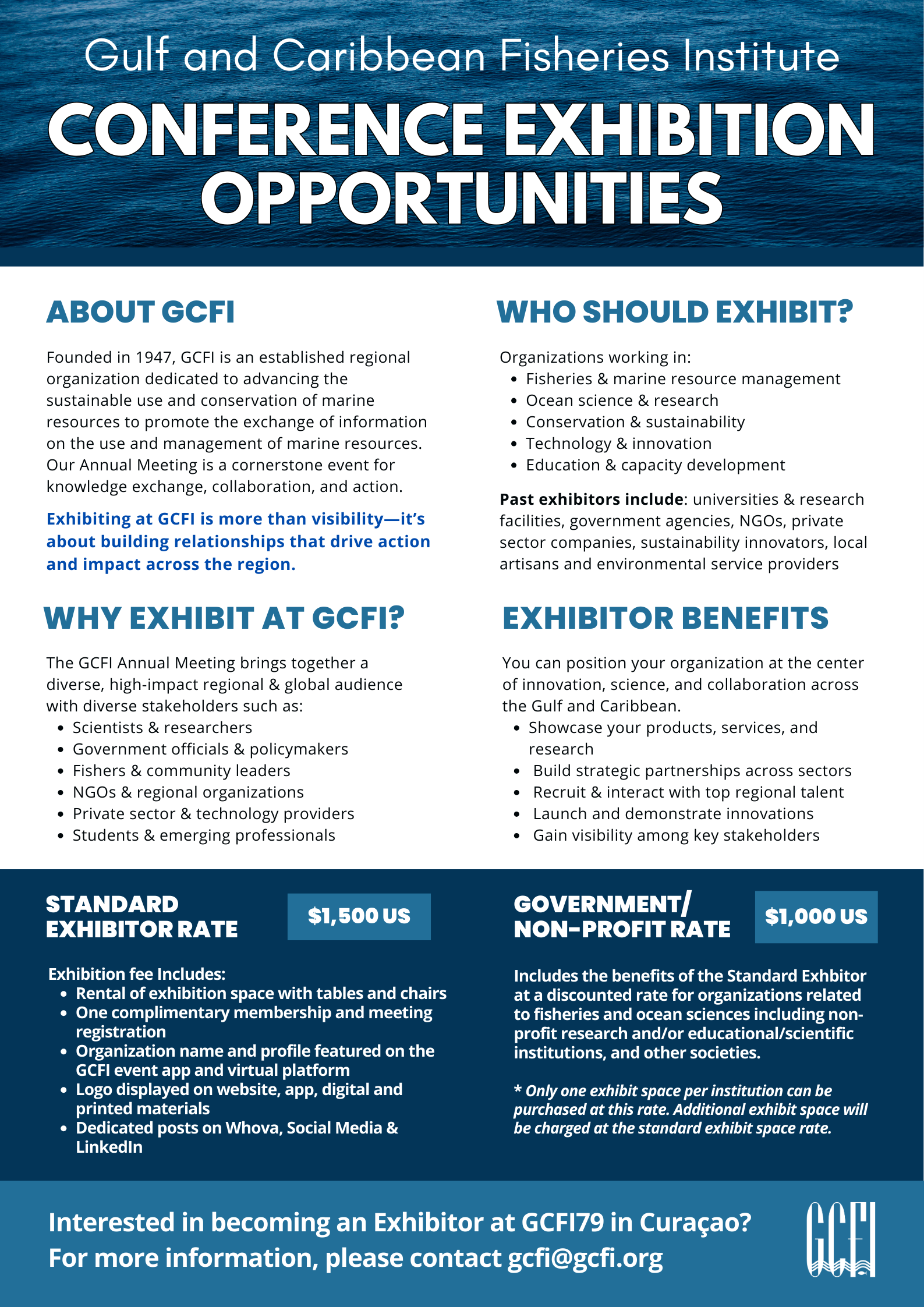
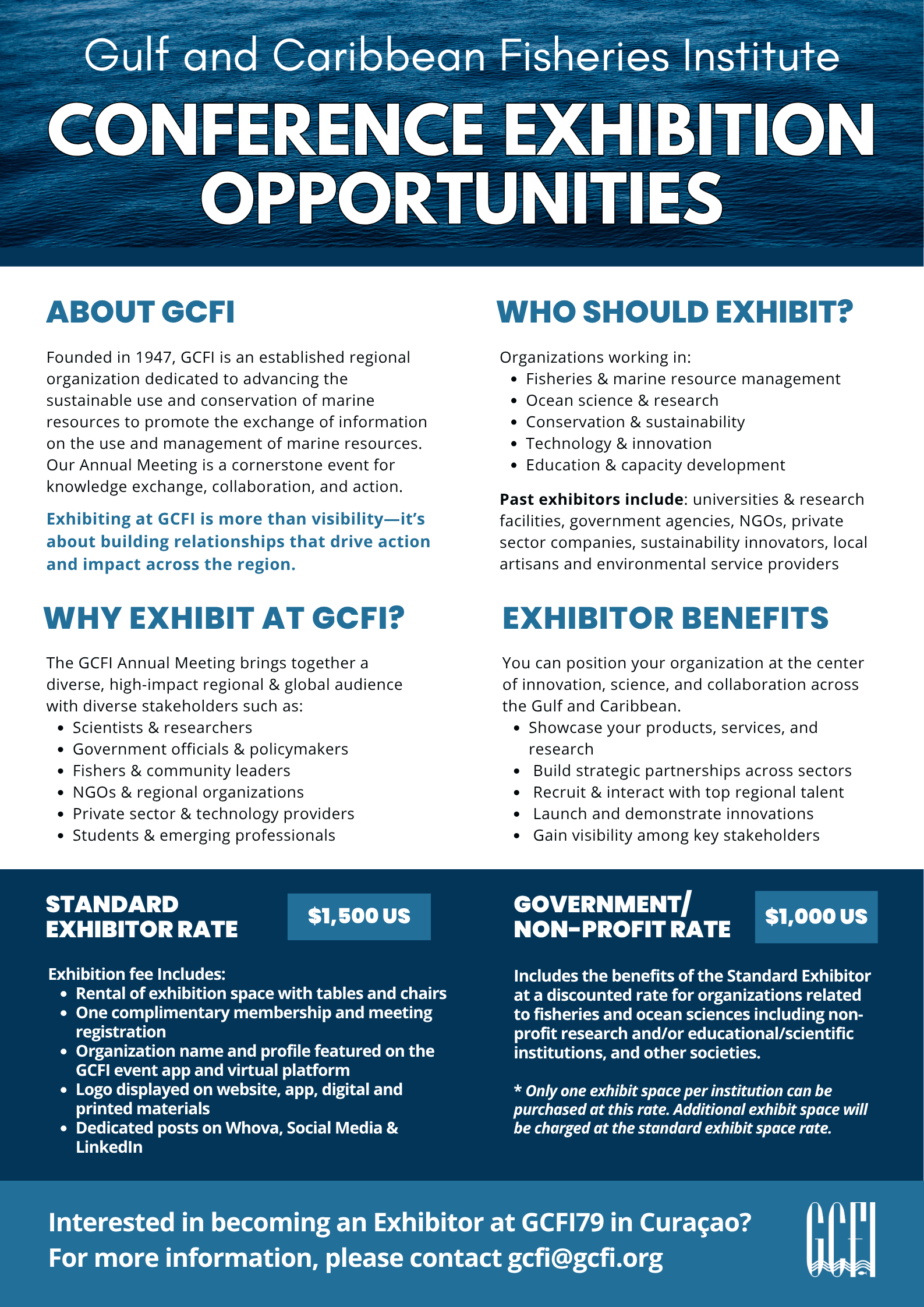
Become an Exhibitor
Pre Conference Workshops (NEW)
Bycatch reduction and fisher-friendly technologies and innovations in Caribbean fisheries
Sunday 1 November, 2026 | 8AM – 4PM | Hosted by REBYC-III CLME+ and EAF4SG
This workshop will present and discuss practical, field-tested solutions for improving the environmental, economic and operational performance of Caribbean fisheries. Building on work under various projects (e.g. REBYC-III CLME+, EAF4SG), the session will highlight advances not only in bycatch reduction and abandoned, lost and discarded fishing gear (ALDFG) management, but also in gear technologies and innovations, fishing method improvements, and vessel design, energy efficiency and safety solutions.
The session will focus on fisher-friendly and scalable innovations that reduce unwanted bycatch and discards, minimize interactions with endangered, threatened and protected (ETP) species and marine megafauna, and address ALDFG, while also improving fishing efficiency, safety at sea, fuel use and economic viability. By taking a broader systems perspective, the session aims to demonstrate how technological and operational innovations can jointly support sustainable fisheries, resilient livelihoods and continued access to international seafood markets.
Bringing together scientists, fisheries managers, policy makers, technology developers, project partners and fisher representatives, the session will provide a platform to exchange lessons learned from applied research, field trials, co-design processes with fishers, and policy-support activities in Trinidad and Tobago, Guyana, Suriname, Barbados and across the wider Caribbean region.
Technical contributions will cover a diverse range of innovations, including:
• Bycatch reduction technologies and gear modifications, such as square-mesh panels, flexible grids, codend designs, hook modifications, pingers and net illumination;
• Fishing method innovations, including changes in deployment practices, spatial and temporal strategies, and operational adjustments that reduce bycatch and improve selectivity;
• ALDFG prevention and management, including gear marking, reporting systems, retrieval initiatives and fisher-led solutions;
• Vessel and onboard innovations, including energy-saving technologies, improved deck layouts, safety equipment, and low-cost adaptations that enhance working conditions and reduce operational risks.
Register your interest via this link
Contact: Nerissa Lucky ([email protected])
Quantifying Local Knowledge to Support Management in Data-Limited Fisheries
Sunday 1 November, 2026 | 8AM – 1PM| Sponsored by Bonefish & Tarpon Trust | Hosted by Florida International University, Project Seagrass and Bonefish and Tarpon Trust
This interactive workshop introduces a standardized, quantitative approach for assessing data-poor fisheries using local ecological knowledge, based on the Best Catch Assessment (BECAA) framework. The session is motivated by a central challenge in fisheries science and management: most fisheries globally lack the long-term, high-resolution data required for conventional stock assessments, yet management decisions must still be made under uncertainty.
The primary goal of this session is to equip participants with practical tools to extract, interpret, and critically evaluate quantitative information derived from memory-based data. Specifically, the workshop will focus on three key technical issues: (1) how to transform local ecological knowledge into quantitative metrics using proxy indicators such as “best day” catch rates to reconstruct temporal trends; (2) how survey design, respondent diversity, and sampling strategies influence data quality, including insights from a “wisdom of crowds” approach; and (3) how to identify, interpret, and address biases inherent in recall-based datasets, including shifting baselines, recall bias, and sampling limitations.
Target Audience & Benefits
This workshop is designed for scientists, fisheries managers, and practitioners working in data-limited systems, particularly those in small-scale, recreational, or multi-species fisheries common throughout the Gulf and Caribbean region. It will also be relevant to NGOs, early-career researchers, and practitioners interested in integrating local ecological knowledge into fisheries assessment and management.
The session is especially valuable for individuals who face the challenge of making decisions with limited or incomplete data. Many fisheries in the region lack the long-term monitoring needed for conventional stock assessments, yet still require informed, defensible management. This workshop provides a practical framework for working within those constraints.
Participants will benefit by gaining hands-on experience with a structured, quantitative approach for using memory-based data to reconstruct fishery trends. Beyond learning the method itself, the workshop emphasizes critical thinking—helping participants understand how survey design, sampling, and bias influence results, and how to interpret these data appropriately. The interactive format allows participants to actively engage with real-world scenarios, compare interpretations across groups, and explore how different assumptions can lead to different conclusions.
By the end of the session, participants will leave with practical tools they can adapt to their own systems, as well as a clearer understanding of when these approaches are appropriate, how they can support management decisions, and how they fit alongside more traditional assessment methods. The workshop is intended to bridge the gap between data limitations and decision-making, providing participants with actionable strategies for applying local knowledge in a rigorous and defensible way.
Register your interest via this link
Contact: Sophia Costa ([email protected])
Scaling Community-Based Megafauna Conservation in Wider Caribbean Small-Scale Fisheries
Sunday 1 November, 2026 | 1PM – 5PM | Hosted by WWF-NL, Sanctuaire Agoa, and SPAW RAC
Workshop purpose. This interactive workshop introduces the CAMAC approach to reducing megafauna bycatch through Collaborative Fisheries Research (CFR), placing fishers’ experience and knowledge at the center of conservation planning. Drawing on field experience from CAMAC 2, the session will demonstrate how local context, Fisher Ecological Knowledge (FEK), sociotechnical surveys, and collaborative calibration can be combined to identify practical opportunities for reducing megafauna impacts while supporting sustainable small-scale fisheries.
Objectives:
- Introduce participants to the rationale, methodology, and practical tools underpinning the CAMAC fisher-centric approach.
- Explore how collaborative data collection and sociotechnical approaches can strengthen understanding of fisheries–megafauna interactions.
- Examine the links between megafauna bycatch, illegal, unreported and unregulated fishing (IUUF), and broader ecosystem and fisheries outcomes.
- Identify potential partners, field locations, and opportunities to apply or adapt the CAMAC approach across the Wider Caribbean.
Expected Outcomes:
- Participants gain a practical understanding of CAMAC’s sociotechnical tools, collaborative research framework, and data-management strategies, including interim results.
- Participants explore the potential multi-taxa implications of IUUF and the basin-wide consequences of bycatch and fishing impacts on highly migratory species.
- Participants identify opportunities to align megafauna conservation objectives with sustainable local fishing practices.
- Potential collaborations, priority locations, and next steps for applying the approach are identified.
Workshop Structure
| Session | Focus |
| Part 1 | The GCFI Context | Position CFR within the GCFI tradition of engaging fishing communities. Examine the gap between top-down management recommendations and local experience, and introduce the rationale for a complementary, field-based approach to issues such as bycatch and IUUF. |
| Part 2 | Why Megafauna Matter to Fisheries | Explore the ecological and operational importance of megafauna and the range of regional contexts in which they are perceived—as targets, nuisances, non-issues, or highly sensitive topics. Consider how bycatch can affect both populations and fishing operations. |
| Part 3 | Finding Common Ground | Identify practical ‘low-hanging fruit’ where megafauna conservation can also deliver direct benefits to fishers, including gear preservation, reduced bait loss, improved safety, and more sustainable fishing practices. |
| Part 4 | CAMAC Tools and Application | Demonstrate sociotechnical surveys, FEK, collaborative calibration, and fisheries-interaction data collection. Discuss how these tools can support locally grounded decision-making and identify opportunities for application in other Caribbean fisheries. |
Register your interest via this link
From the sky to the reef: Drones and AI for marine and coastal ecosystem´s monitoring
Sunday 1 November, 2026 | Hosted by Universidad Nacional de Colombia, Universidad de los Libertadores, División de Ciencia Tecnología e Investigación de la Armada Nacional de Colombia
“From the Sky to the Reef: Drones and AI for Marine and Coastal Ecosystem’s Monitoring” introduces participants and stakeholders to innovative tools that combine aerial drone technology using consumer grade drones, and artificial intelligence to enhance environmental monitoring, including hard access areas at shallow reefs or mangroves. The workshop explores how drones capture high-resolution imagery of coastal and marine habitats, while AI processes this data to detect changes, assess ecosystem health, and support restoration strategies. It emphasizes practical applications for coral reefs, mangroves, and seagrasses, highlighting the role of technology in advancing conservation, resilience, and community-based management. The workshop will include short technical talks and practical activities to allow participants to explore and experience some of the techniques. Also this workshop will be handled in smooth language to allow understanding of local community members, fishers and academic participants. In addition to ecosystem monitoring, the workshop also will include some insights on megafauna such as sea turtle monitoring using drones.
Drones offer a great tool for marine ecosystems and fauna monitoring, specially for Caribbean territories. These tools allow to strengthen local capabilities for monitoring Gulf and Caribbean territories specially under climate change challenges.
Register your interest via this link
Contact: Julián Prato Valderrama ([email protected] / [email protected])
Expanding the horizons of Goliath Grouper conservation: Strengthening the Global Goliath Grouper Conservation Network
Sunday 1 November, 2026 | 8AM – 4PM | Hosted by Meros do Brasil, IUCN Grouper & Wrasse SG, and Universidade Federal de Pernambuco
This session marks the consolidation and expansion of the Global Goliath Grouper Conservation Network, a worldwide collaboration dedicated to sharing expertise, disseminating knowledge, identifying research priorities, and creating conservation opportunities for Goliath Groupers on a global scale. The workshop will transcend its original Atlantic focus to encompass the world’s three primary goliath grouper species: Epinephelus itajara (Atlantic), Epinephelus quinquefasciatus (Pacific), and Epinephelus lanceolatus (Indo-Pacific). Leveraging the GCFI meeting in Curaçao, this session will serve as a central hub to connect successful initiatives from the Wider Caribbean and the Atlantic with researchers and conservationists from other oceanic basins.
Objectives and Technical Topics:
- Expertise and Knowledge Sharing: To promote the exchange of data and lessons learned regarding the biology, ecology, connectivity, and anthropogenic threats (e.g., overfishing and habitat degradation) facing the three species (E. itajara, E. quinquefasciatus, and E. lanceolatus).
- Identification of Research Priorities: To map global data deficiencies and standardize methodologies for assessing population and genetic status across different oceans.
- Conservation Opportunities: To develop joint strategies and identify operational windows for the establishment and management of Marine Protected Areas (MPAs), the protection of fish spawning aggregations (FSAs), and community engagement frameworks.
- Global Strategic Action Plan: To outline practical steps and governance guidelines for the global network throughout the UN Decade of Ocean Science.
Target Audience & Benefit: The workshop is aimed at global researchers, fisheries and protected area managers, government policymakers, international NGOs, and community leaders. The primary benefit lies in fostering a borderless collective intelligence for the conservation of these apex predators, thereby optimizing scientific resources, standardizing global monitoring methodologies, and reinforcing conservation policies through a unified, evidence-based approach.
Register your interest via this link
Contact: Maira Borgonha ([email protected])
Navigating Change: Resilience for Caribbean Fisheries
Sunday 1 November, 2026 | 2PM – 4PM | Hosted by CARMABI Research Station
Please note that this workshop will be help at CARMABI Research Station (walking distance from Curaçao Marriott Hotel)
Fish Schools, Coral Networks, and Fishing Communities: What Biomimicry Teaches Us About Resilience. This interactive workshop explores how nature can inspire more resilient fisheries and coastal communities. Drawing on ‘Resilience Science Must-Know #6 — relationships among people and with nature build resilience’ — participants will use fish schools, coral reef networks, mangrove root systems, and mutualistic reef relationships as models for understanding cooperation, connectivity, knowledge exchange, and collective action. The underlying resilience science emphasizes that strong, reciprocal relationships enable flows of information, resources, trust, and support, while connections between people and ecosystems strengthen the capacity to respond and adapt to change.
Through participatory exercises, a “Human Reef” network simulation, Caribbean fisheries case studies, and a future-design challenge, participants will experience how resilience emerges from relationships rather than isolated actors. The workshop will translate resilience science into practical ideas for fisher networks, co-management, science–community partnerships, and ecosystem-based fisheries management.
Convenors: A cross-sector team of resilience scientists, fisheries practitioners, community representatives, and facilitators working at the interface of marine ecology, social-ecological resilience, and participatory fisheries governance.
Register your interest via this link
Contact: Manfred Van Veghel ([email protected])
The Future of Gulf and Caribbean Fisheries and Fisheries Science
Wednesday 4 November (2pM – 6PM) | Hosted by University of Waterloo and University of the West Indies, Mona Campus, Jamaica
The purpose of this workshop is to conduct a foresight exercise on the future of Gulf and Caribbean fisheries and fisheries science. Foresight analysis is a structured and strategic approach to exploring the potential implications of multiple, plausible future scenarios (Lambert et al. 2019). We propose a full-day long foresight exercise that is broken into two sessions. The first session would focus on the future of Gulf and Caribbean fisheries. The purpose of the first session is to bound the range of plausible future scenarios specifically for fisheries in the region (e.g., how will fisheries change in the future?). The second session will build on the morning session to determine the fisheries science necessary to improve capacity under each scenario of future fisheries.
Target Audience & Benefit: The target audiences are fishers, fisheries managers, researchers, governments, NGOs, and other key stakeholders. There are two main benefits of the workshop. First, the workshop will help illuminate the possible future trajectories of fisheries in the region. These insights will assist fishers, managers, and governments develop adaptive strategies to minimize risks and take advantage of opportunities as they emerge. Second, the workshop will help frame and develop a strategy for fisheries science to provide optimal support to decision makers. These insights provide researchers and NGOs with guidance on how best to support the adaptive capacity of the region through targeted research and dissemination activities.
Register your interest via this link
Contact: Jeremy Pittman ([email protected])
Special Sessions (NEW)
Caribbean Blue Economy Financing
Hosted by: Caribbean Biodiversity Fund
This special session is designed to catalyze private sector engagement in the Caribbean blue economy by introducing practical ways for businesses, fisheries operators, NGOs, and research institutions to participate, collaborate, and showcase opportunities through the Caribbean Blue Economy Hub under the Blue Economy Financing (BluEFin) Project by the Caribbean Biodiversity Fund. The session will highlight how marine conservation and restoration can drive both ecological resilience and economic value, while reinforcing the importance of protecting the region’s natural marine ecosystems. It will include examples of investment-ready projects, blended finance approaches, and partnership models emerging through the Caribbean Blue Economy Hub. Participants will gain insight into available capacity-building support, sustainable financing options, and emerging investment opportunities tailored to the region’s ocean-based sectors. With a focus on elevating visibility, building strategic partnerships, and advancing project development, the session aims to inspire action and cultivate a strong pipeline of innovative fisheries- and ocean-based initiatives.
Advancing 30×30 in the Caribbean: regional approaches to offshore MPA designation and management
Hosted by Blue Marine Foundation and Caribbean Cetacean Society
This special session will bring together government representatives, conservation organisations, and regional experts to examine how the Caribbean region can meaningfully advance progress towards the global 30×30 target, with a particular focus on the opportunities and challenges of offshore marine protected area (MPA) designation and management. While many Caribbean nations have committed to 30×30, translating this target into effective, well-managed offshore MPAs remains a shared technical and governance challenge. This session will explore practical approaches to implementation, including policy development and long-term monitoring and enforcement. The session will highlight recent progress in the Dutch Caribbean, using Curaçao as a flagship case to examine the process of developing a large-scale offshore MPA. This includes insights into the technical, governance, and operational considerations involved, as well as lessons that may be relevant across the wider Caribbean region. A dedicated segment will focus on developments in Curaçao, with the potential for a formal 30% MPA designation announcement, subject to national timelines.
Bojeo a Cuba: Scaling National Marine Monitoring into Actionable Conservation and Fisheries Management in the Caribbean
Hosted by Environmental Defense Fund
This special session will showcase the “Bojeo a Cuba” circumnavigation expedition as a scalable, national-level model for integrating marine monitoring, fisheries science, and policy-relevant action across the Caribbean. Conducted in 2023, during the heatwave that triggered the 4th global coral bleaching event, the expedition covered 1,960 nautical miles over 53 days and surveyed 66 sites in 23 reefs across Cuban waters, involving more than 30 national and international institutions. It generated one of the most comprehensive recent baselines of coral reef condition, coral health, fish communities, marine megafauna, and human impacts in the region. The session will synthesize key findings and focus on how these results are being translated into management and policy, addressing:
• National-scale marine biodiversity baselines and monitoring systems
• Climate change and fisheries interactions
• Drivers of reef fish biomass and ecosystem resilience
• Marine megafauna distribution and conservation priorities
• Multispecies and ecosystem-based fisheries management approaches
• Co-design processes linking scientists, communities, and decision-makers
• Pathways from scientific data to national regulations and conservation strategies
Student Accommodation (NEW)
Affordable Accommodation for Students & Young Professionals
We are pleased to share an affordable accommodation option for students and young professionals from low-income countries attending GCFI79 in Curaçao this November.
Through the support of CARMABI Research Station, a limited number of discounted rooms will be available within walking distance of the Curaçao Marriott Beach Resort, the official venue for GCFI79. This provides a great opportunity for students and early-career professionals from low-income countries to stay close to the conference while keeping accommodation costs manageable.
Accommodation Options
Student Rooms – US$17 per person/night
Dormitory-style accommodation with shared bathroom and other facilities.
Deluxe Rooms – US$28 per person/night
Accommodation with private bathroom and air conditioning and other shared facilities.
Deluxe Double Occupancy – US$42 per room/night
Accommodation for two people with private bathroom and air conditioning and other shared facilities.
Please note that the student accommodation is dormitory-style and facilities are shared. These rooms are very basic and are intended as a simple, budget-friendly option for participants who prioritize affordability and convenient access to the conference venue.
GCFI is committed to making participation in our Annual Conference as accessible as possible, particularly for students and young professionals who are building their careers and professional networks in fisheries and marine science. We are therefore delighted to make this additional accommodation option available for GCFI79.
Availability is limited, so interested participants are encouraged to make arrangements as early as possible by sending their booking requests to: [email protected]
We extend our sincere thanks to CARMABI for helping us create a more accessible GCFI79 experience for the next generation of fisheries and marine science professionals.
Keynote (NEW)
The Gulf and Caribbean Fisheries Institute (GCFI) is pleased to announce Dr. Mark Vermeij, Science Director at CARMABI in Curaçao and Professor at the University of Amsterdam, as the Keynote Speaker for GCFI79.
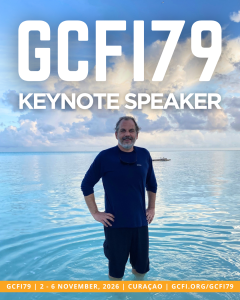 Dr. Vermeij brings an exceptional combination of international scientific expertise and deep, locally grounded Caribbean experience to GCFI79. After obtaining his PhD from the University of Amsterdam, he conducted postdoctoral research at the University of Miami and in Hawaiʻi before establishing his career in Curaçao. His research focuses on coral reef community dynamics across multiple spatial and biological scales, including microbial, genetic, and metabolomic approaches.
As Science Director at CARMABI, Dr. Vermeij works at the intersection of science, conservation, management, and island development. CARMABI has a long history of facilitating Caribbean research, supporting hundreds of visiting researchers, advising governments and NGOs, managing protected areas, and engaging local schoolchildren through environmental education.
What makes Dr. Vermeij’s perspective particularly valuable for GCFI79 is that his work is not only about the Caribbean, it is rooted in the Caribbean. Being permanently based in Curaçao has given him firsthand experience with one of the region’s most important challenges: how small island nations can pursue economic development while safeguarding the marine resources upon which their communities and economies depend.
In his Keynote Address “Missing Conservation Goals,” Dr. Vermeij will challenge us to consider the gap between scientific ambition and what is realistically achievable for small Caribbean nations. Drawing on his personal and professional experiences, he will explore why some proposed conservation approaches can be difficult to implement in small-island contexts and argue for clearer, practical measures of conservation success that better support long-term decision-making.
His keynote promises to be thought-provoking, candid, and firmly grounded in both high-quality science and the realities of working and living in a Caribbean small-island setting, making it especially fitting for the GCFI79 theme: Future-Proofing Fisheries: Resources, Resilience, and Tradition.
We look forward to welcoming Dr. Mark Vermeij to the GCFI79 stage in Curaçao and to an important conversation about what effective and achievable marine conservation can look like for our region.
Agenda (NEW)
Loading…