

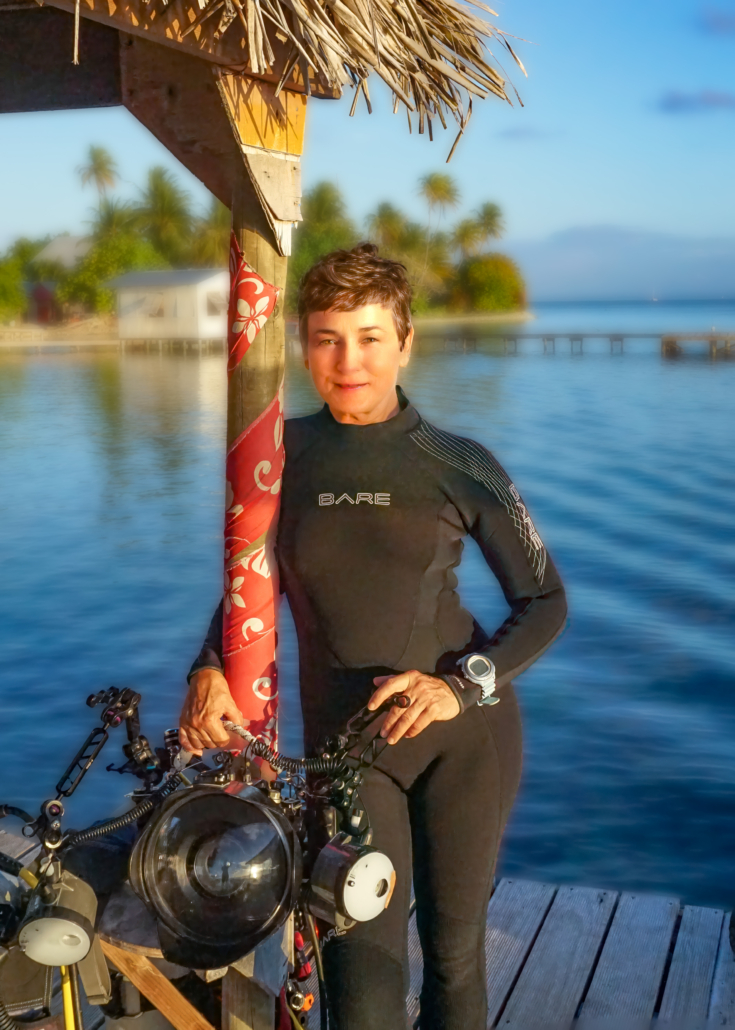
 What first drew you to science, fisheries, or the ocean?
I loved animals and I loved the water from a very young age. My father gave me a mask and snorkel on a family holiday in Giens, south France, when I was 11 and I remember vividly the beautiful animals I saw (my first time in the sea..I was brought up in London UK). From that moment on I wanted to be part of that world.
What part of your work makes you feel proud or hopeful?
I am proud of the studies I have done as part of a large community trying to better understand, appreciate and safeguard marine life and, in so doing, also helping those who depend on it (often many poorer communities in parts of the tropics). I have seen positive changes over 30-40 years in attitudes (e.g. many young people no longer want to eat shark fin in Hong Kong-a major change in attitude) and understanding and appreciation of marine life. On the other hand, governments and their policies are not changing quickly enough and in the marine environment overfishing continues and challenges to preserve marine ecosystems increase. The situation is worsened by ‘false hopes’ such as a widespread belief that artificial reefs and aquaculture will solve problems of overfishing. They may help increase production if properly managed but do not solve or help reduce overfishing. If anything, they both make it worse. We have to be thinking more critically and constructively about how to solve the problems in our seas. I am pleased with some of my photos which help to bring beautiful species to a wider public.
What are some of the most significant challenges women or girls face in science in your context?
Women professionals in marine science are far better accepted than they were a generation or two ago and so should not face the same prejudices (in most places). Physical challenges are often there, doing field work for example, and in some cultures a woman’s opinion/advice may not be viewed as seriously as that of a man. More remote locations in some countries can be a little daunting but there are usually many ways to ensure you stay safe with careful planning (and get taken seriously!!!). University entry is usually no longer difficult for women but in some places promotion to the top academic positions can be a little more challenging than for men (partly cultural and partly practical)
What support, opportunities, or conditions have helped you succeed?
A fantastically supportive partner/husband. Believing in myself and being determined to follow my passion no matter what. Parents who encouraged me to follow my dream and to do the best that I could, whatever I did. Doing a PhD was important because it opened up an academic future. Following where the science/field led rather than constraining my options for next steps. I also benefited greatly by a diversity of professional positions, including Director of a government fisheries lab, consultancies, academic position, government committees and engagement with NGOs. All of these give different perspectives.
What is one way organizations like GCFI could help women and girls feel more welcome, supported, or visible in fisheries and marine science?
Help them to build their confidence, including by mentoring young aspiring students. Encourage participation in key positions in the organization.
Is there a woman in science, locally or globally, whose story has inspired you?
Lotte Hass and Eugenie Clark inspired me as being tough women in what was (when I was young) very much a man’s world working underwater. Ms Santi Suharti, a very petite and very tough and very patient Indonesian government employee who worked me across the country in all kinds of conditions, making our work possible
What message would you share with girls considering a career in science or fisheries, especially those who may doubt they belong?
Follow your dream and do what you believe in. There will be challenges (as there are for guys) and, probably, prejudices, but these things can almost always be solved/overcome. Some will never go away. What is important is for you to do something you really want to do.