
 What first drew you to science, fisheries, or the ocean?
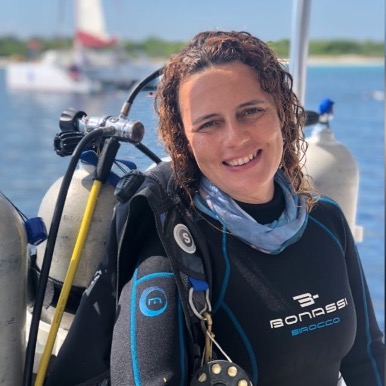
As far back as I can remember, the sea has been part of my life. I was that child who never wanted to leave the water, no matter if it was summer or winter, and I grew up with a very natural and deep connection to the ocean. From a very young age, I knew I wanted to study something related to the sea or to the conservation of marine animals.
That feeling gradually became a clear vocation. In 1998, I decided to study Marine Sciences in Spain, a decision that marked the beginning of a path that led me to work and learn in different countries, including Mexico and the United States. More than 20 years ago, I arrived in the Dominican Republic, a country I now consider my home and that offered me the perfect setting to dedicate my life to marine conservation. Since then, I have had the privilege of working to protect and preserve the country’s marine ecosystems.
What part of your work makes you feel proud or hopeful?
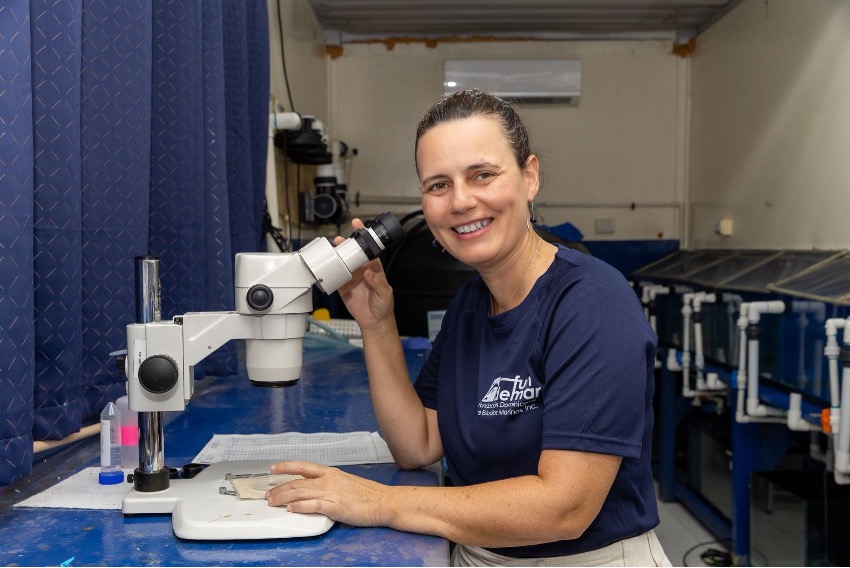
One of the greatest sources of pride in my professional life is the human team we have built at FUNDEMAR and, above all, the community that has been created in Bayahíbe. Everything began in a very organic way, rooted in willingness, respect, and empathy. I arrived with technical knowledge, but I also learned deeply from a community strongly connected to the sea and its environment.
From a small group of volunteers, a network of actors gradually emerged, now including fishers, dive centers, the private sector, hotel operators, local authorities, the Ministry of Environment, and many other people who believed—and continue to believe—in conservation. That sense of belonging has been essential.
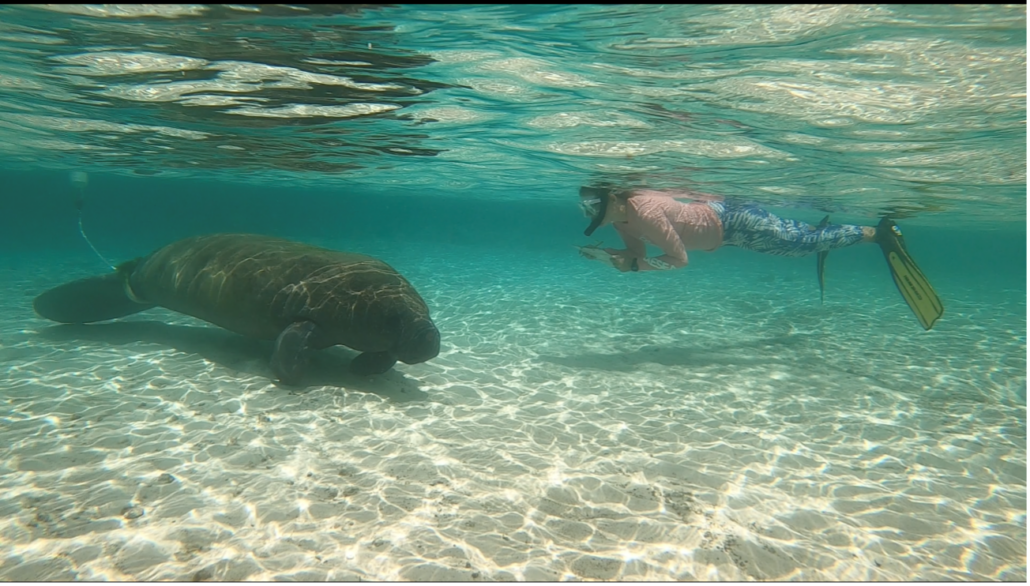
Thanks to this empowered community, we have achieved important advances, from the conservation of manatees and corals to strengthening local capacities. Seeing how this collective effort has had a real impact, both on ecosystems and on people’s lives, is what fills me with hope and motivates me to keep going.
What are some of the most significant challenges women or girls face in science in your context?
In our context, the challenges faced by women and girls in science remain significant. There are deeply rooted cultural barriers, such as gender stereotypes that limit aspirations from an early age and traditional roles that have historically associated women primarily with caregiving and household responsibilities.
In addition, access to university education in fields related to marine sciences has been limited until recently. This is compounded by the lack of visible female role models in the sector, although fortunately this has begun to change in the country. Today, we see more and more women leading scientific and conservation processes, which is essential to inspire new generations.
What support, opportunities, or conditions have helped you succed?
Throughout my career, having a strong academic background has been key, providing me with the tools to face environmental challenges with scientific rigor and commitment. Beyond formal education, context has also played an important role. The Dominican Republic offered me the opportunity to grow, contribute, and develop a long-term conservation mission.
A fundamental source of support in my life has been women pioneers in marine sciences. In 2013, Professor Idelisa Bonnelly entrusted me with the leadership of FUNDEMAR, a responsibility I assumed with the commitment to honor and expand her legacy. That vote of confidence profoundly shaped my path.
On a personal level, I believe one of the most important factors has been the ability to create synergies: being open to listening, understanding different perspectives, and empathizing with all involved stakeholders. Dialogue and collaboration among communities, the private sector, academia, NGOs, and international partners have been the foundation of FUNDEMAR’s growth, as well as my own personal and professional development.
 What is one way organizations like GCFI could help women and girls feel more welcome, supported, or visible in fisheries and marine science?
Organizations like GCFI can support women and girls through mentorship programs that connect young people with female role models in marine sciences and fisheries. Highlighting these women, along with strengthening regional networks, helps break down stereotypes and foster a sense of belonging. In addition, offering practical opportunities such as scholarships, exchanges, and internships can strengthen skills, build confidence, and encourage more active and sustained participation of women in the sector.
Is there a woman in science, locally or globally, whose story has inspired you?
Without a doubt, Professor Idelisa Bonnelly de Calventi has been my greatest inspiration. She is considered the mother of marine conservation in the Caribbean and left an invaluable legacy, not only through her scientific contributions, but also through her ethics, vision, and commitment to training new generations. Her legacy continues to guide our work at FUNDEMAR.
What message would you share with girls considering a career in science or fisheries, especially those who may doubt they belong?
I would tell them to listen to their hearts. That is what my mother told me when I decided to study Marine Sciences, at a time when it was seen as a career with no future. Studying what you are passionate about is a life decision. If something truly motivates and moves you, don’t hesitate. The path is not always easy, but when you work in something you love, opportunities appear and your vocation grows stronger. Science and conservation need more women, more diverse perspectives, and more committed people. If they feel that passion, that is already the first step