
 What first drew you to science, fisheries, or the ocean?
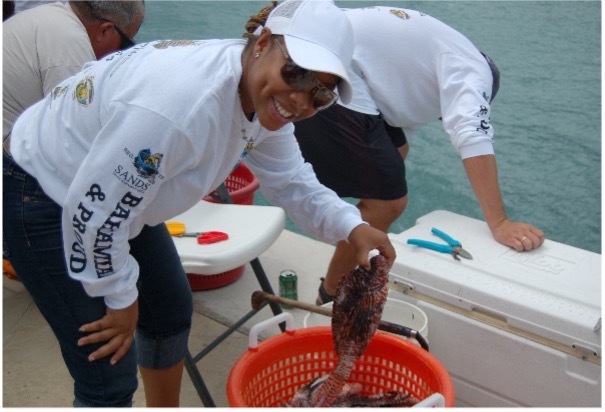
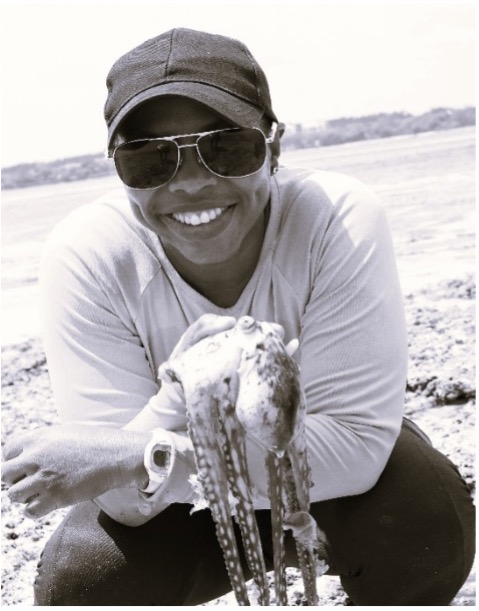
Since I was ten years old, I have always been fascinated with what lies below the surface of the sea. My father and other relatives loved fishing and snorkeling. As kids, they taught my siblings, cousins and other younger relatives the art of fishing whether by spear or handline, and diving for conch. In the summer months, we spent most of our time on Eleuthera, Bahamas snorkeling with the dolphins and turtles, and fishing for snappers, grunts and groupers. The older generation would talk about how important the sea is to us and why we should respect it. My father would say “if you are going to survive in this world, you have to learn to take care of nature, so it continues to take care of you.” Over time I came to understand and appreciate that statement! As a result of these early experiences, I grew a strong interest and passion for learning more about marine life. By 12 years old, I knew what I wanted to pursue as a career – Marine Science. I stayed focused on that path with active support from my family. My exposure to the marine environment as a child not only played a foundational part of my life, but it allowed me to see through many eyes how vital our marine life is to our Caribbean culture, livelihood, and wellbeing.
What part of your work makes you feel proud or hopeful?
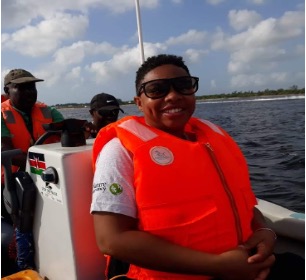
Over time I have come to appreciate all aspects of our conservation work including: 1) protecting and restoring mangroves and coral habitats, 2) improving gender equity in fisheries, fisheries management and fishing practices, and 3) working with community members and government to establish suitable ways to safeguard and sustain key marine species that support our way of life. However, what TRULY motivates me is knowing that my contributions to fisheries conservation help to make a difference in someone else’s life, the country and communities they live in, and in shaping the minds of young people by nurturing environmental stewards. Conservation is not a “job” for me it is a PASSION. Working collectively with communities, partners and governments in several countries through TNC’s FishPath program, has given me a chance to listen, and learn how vital coastal fisheries are in their lives, the challenges they face, and to explore potential solutions and opportunities that support economic growth, food security, and livelihood development while building community resilience. Looking at where we were in the past, where we are now and the efforts made through TNC’s FishPath work to get us where we aspire to be, gives me great hope that we will develop and sustain a life that enables us to survive and thrive, in a changing world ….
 What are some of the most significant challenges women or girls face in science in your context?
Females entering the science field or working within fisheries are challenged by differences in social and culture norms (i.e. science and fisheries viewed as a male-dominated industry). For example, there are gender biases in science where females unfortunately are considered less skilled than a male and thus their voices are not heard and their proficient skillsets are not valued and recognized. This type of unhealthy environment has resulted in women becoming de-motivated and failing to advance their desired career. In other cases where women were respectfully assertive and expressed productive feedback, were then viewed as opinionated and uneasy to work with. However, the same actions shown by a man is viewed differently i.e. he portrays good leadership and communication skills.
In addition to the gender biases and stereotyping of women in science within their own personal career path, working in fisheries conservation has revealed that the same bias exists for women entering a sector that is considered male-dominated. Globally about 40% of women are involved in the fisheries value chain conducting sales, marketing, and work-intensive duties related to pre-and- post-harvesting, and processing. Yet these duties are not considered as vital as the act of fishing. Therefore, women are undervalued, paid less, and have limited access to resources, funding, education, and training opportunities. Because of this, women are constrained from rising up as fisheries leaders, decision makers or managers and remain in these “unseen” roles.
Recognizing the challenges we are faced with when pursuing a career in science or even entering a fisheries business, motivates me more to work with partners, governments and agencies towards creating equal opportunities where all genders can prosper.
What support, opportunities, or conditions have helped you (or others) succeed?
The greatest support that I received over my career that has helped me to achieve my goals is having good mentors and peers that authentically respected and encouraged me to pursue interested and relevant opportunities, invested resources in building my skillsets and provided guidance whenever needed to help me persevere along my career path. It is through these mentorships that I was able to build strong social and professional relationships, networks and partnerships like with GCFI that exposed me to unforeseen opportunities and introduced me to the larger marine conservation and science community in the Caribbean and Gulf regions. Such interactions continue to play an instrumental part in helping me achieve my career goals and give me the chance to engage and guide others who are pursuing a similar path.
What is one way organizations like GCFI could help women and girls feel more welcome, supported, or visible in fisheries and marine science?
Over the years, GCFI has done an excellent job bringing scientists, researchers, students and practitioners together from the Caribbean and Gulf Regions to share their work, experiences and lessons learned. One way that the organization can assist in supporting and empowering women is to hold a series of mentoring sessions over the course of a year where experienced women conservation practitioners, researchers, etc., are selected (or request volunteers from the GCFI pool) to mentor young female students who are entering or in the early stages of the science field and; allow a special session for those students to present how the mentorship benefitted them and how the tools shared were applied in their research or work at GCFI annually.