
 What first drew you to science, fisheries, or the ocean?
My journey into ocean work did not begin in a laboratory or aboard a research vessel. It began on a small piece of rock surrounded by water, where the ocean was not just a subject of study but a way of life. Growing up in Grenada, the ocean shaped our livelihoods, our food security, and our identity. While I did not initially see myself reflected in traditional marine science spaces, I developed something just as critical: curiosity, discipline, and a deep respect for the sea and the people who depend on it.
I have spent more than two decades in public service. My early career in Customs and Excise, specializing in enforcement, provided rigorous education in law and vigilance. That path led me to the Financial Intelligence Unit as a Financial Investigator. When that environment became untenable, I was reassigned to the Ministry of Agriculture—a shift that initially felt like a setback. Yet this challenging redirection proved fateful: an internal transfer placed me within the Fisheries Division, where my work moved decisively into fisheries monitoring, control, and surveillance. Over time, my role expanded beyond enforcement into intelligence analysis, inter-agency coordination, policy support, and regional collaboration.
This non-linear path taught me that a woman’s career is often a navigation through headwinds, but that points of resistance can also redirect you toward where you are meant to be.
What part of your work makes you feel proud or hopeful?
I feel proud when information leads to action-when data, analysis, and collaboration help protect marine space or strengthen decision making. Whether is identifying suspicious vessel behaviour, supporting Inter-agency cooperation, or when i see growing recognition of the role women play in applied and operational ocean work
My job sits at the intersection of ocean science, enforcement, and governance. In this space, I learned to read vessel movements the way others read charts—interpreting patterns, anomalies, and behaviours at sea. My job is reliant on systematic observation, data analysis, and informed judgment to understand what is happening in our Caribbean marine space and to translate that information into action. The science I practice is applied: it uses satellite data, spatial analysis, and behavioural pattern recognition as critical tools for protection. This is where science becomes operational and where information becomes protection.
 What are some of the most significant challenges women or girls face in science in your context?
Being a woman in this space has meant continuously establishing credibility—often in environments where women are underrepresented and technical authority is assumed rather than granted. It has required resilience: documenting carefully, analysing thoroughly, asking difficult questions, and showing up consistently, even when doing so was uncomfortable.
Some challenges that women face include unequal opportunities for leadership roles, they may face subtle biases and stereotypes about our capabilities especially in male-dominated areas.
What support, opportunities, or conditions have helped you succeed?
Mentorship is crucial. Access to networks, conferences and collaborative projects helps build confidence and open doors.
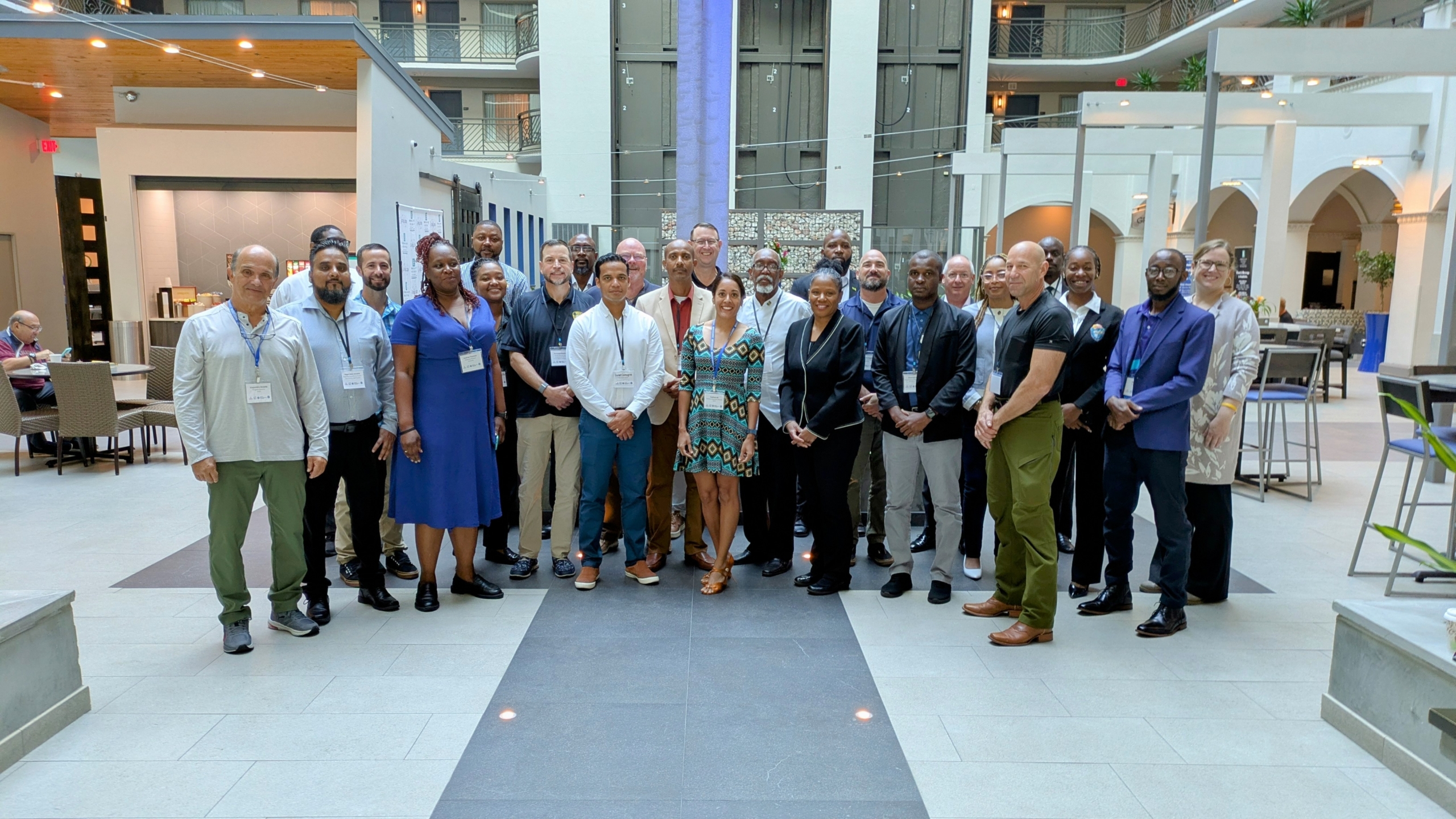
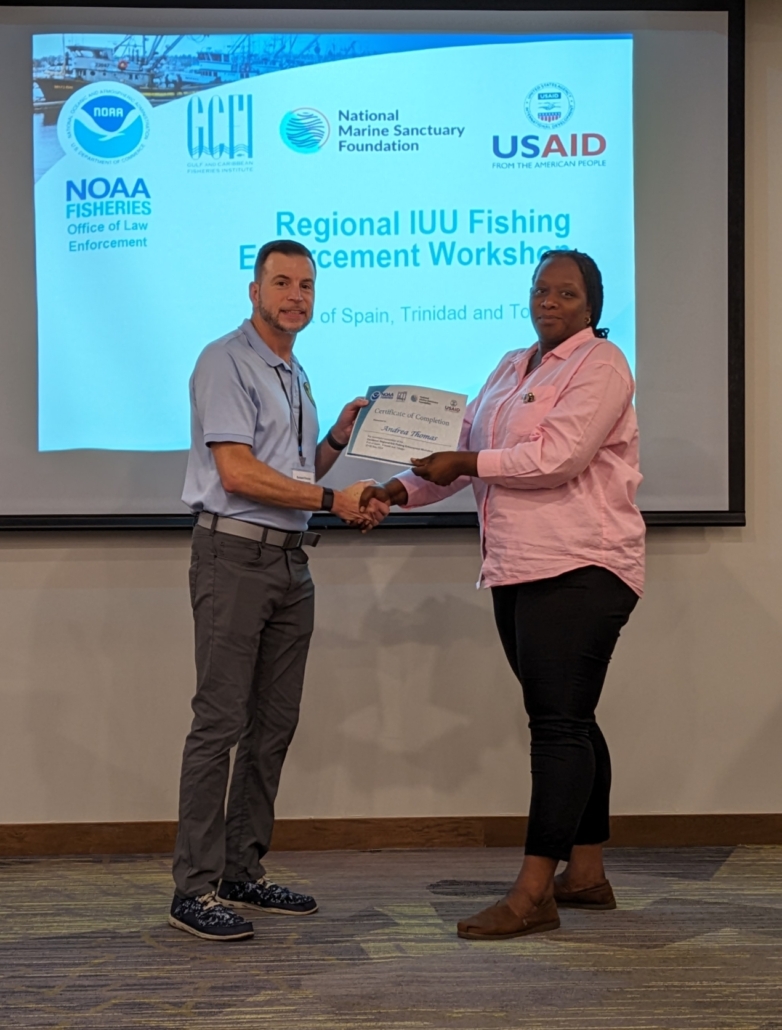
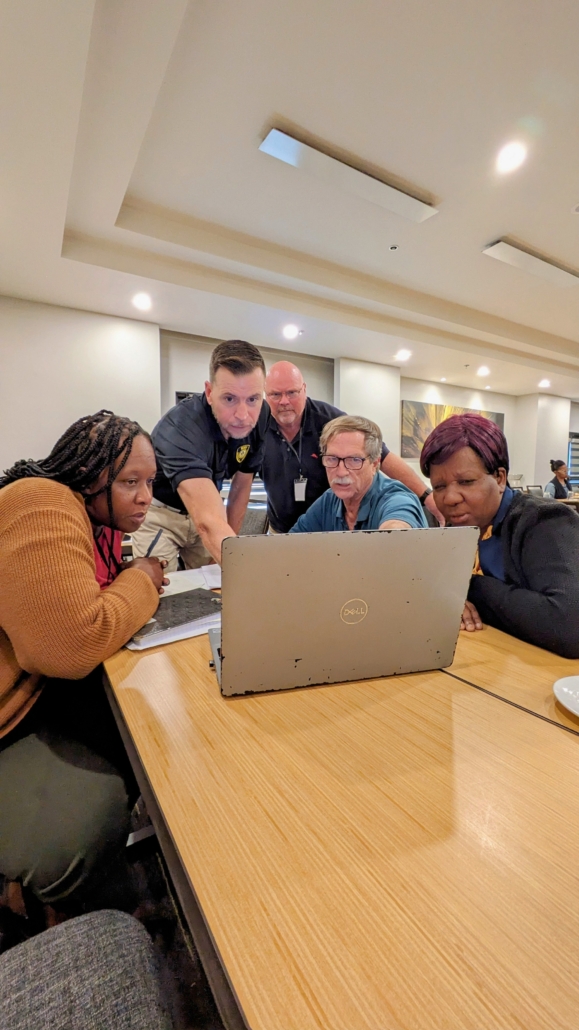
My role has taken me into regional and international discussions on fisheries crime, maritime security, and ocean governance. My professional development has been bolstered by courses organized by Gulf and Caribbean Fisheries Institute (GCFI) in collaboration with the National Oceanic and Atmospheric Administration (NOAA), on Case Packaging Preparation and Regional IUU Fishing Enforcement just to name a few, which solidified the technical and collaborative foundations of my work. Through collaboration with our Caribbean and Gulf neighbours and regional bodies, I’ve seen how our shared sea demands shared vigilance. Through these experiences, I have seen how essential women’s perspectives are—particularly in applied and operational spaces where decisions directly affect communities, ecosystems, and national interests. Women often bridge the gap between data and lived experience, between policy and reality.
What is one way organizations like GCFI could help women and girls feel more welcome, supported, or visible in fisheries and marine science?
Mentorship and visibility programs that connect women across all disciplines and career stages.
Final thoughts
My purpose is not only to safeguard marine resources, but to help build systems that recognize the value of applied ocean knowledge, and the often-invisible contributions women make across the ocean space. I believe that the strongest ocean solutions emerge at intersections—between science and practice, data and people, enforcement and stewardship.
My story is still unfolding. But one thing is clear: the future of our oceans depends not only on what we study, but on how we observe, interpret, and act. For our Gulf and Caribbean region, empowering these diverse, practical, and steadfast approaches is key to our shared future. And women belong in every part of that process.