
 What first drew you to science, fisheries, or the ocean?
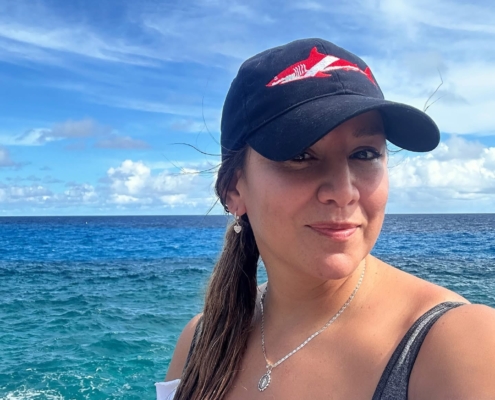
From my earliest memories, the ocean has been more than a backdrop — it has been a source of wonder, belonging, and purpose. Growing up in the Archipelago of San Andres, Providence, and Santa Catalina, I spent countless hours on the shore collecting shells and conches, captivated by the vibrant colors and life beneath the waves. When I learned to dive with my father at the age of twelve, that fascination became a profound connection; in those first breaths underwater, I felt an unspoken calling to understand and protect the world beneath the surface. That connection deepened with each experience. While studying biology, I became increasingly aware of how rapidly marine ecosystems — especially coral reefs — were deteriorating. I saw firsthand how declines in reef health affected not only biodiversity but also the cultural and economic fabric of island communities. After working on remote Pacific coral and shark research with the Maplero and Other Marine Ecosystems Foundation, I realized that returning to my home waters to confront local conservation challenges was not just a choice, but a responsibility. This path mattered to me because it united my scientific curiosity with a deep commitment to my community’s future. I want everyone — from future generations of island youth to visitors experiencing these waters for the first time — to step into a healthy, thriving ocean. That desire transformed what was once childhood fascination into a lifelong mission: to generate science that drives conservation, builds resilient communities, and ensures that the seas of the Caribbean continue to sustain both life and culture for decades to come.
What part of your work makes you feel proud or hopeful?
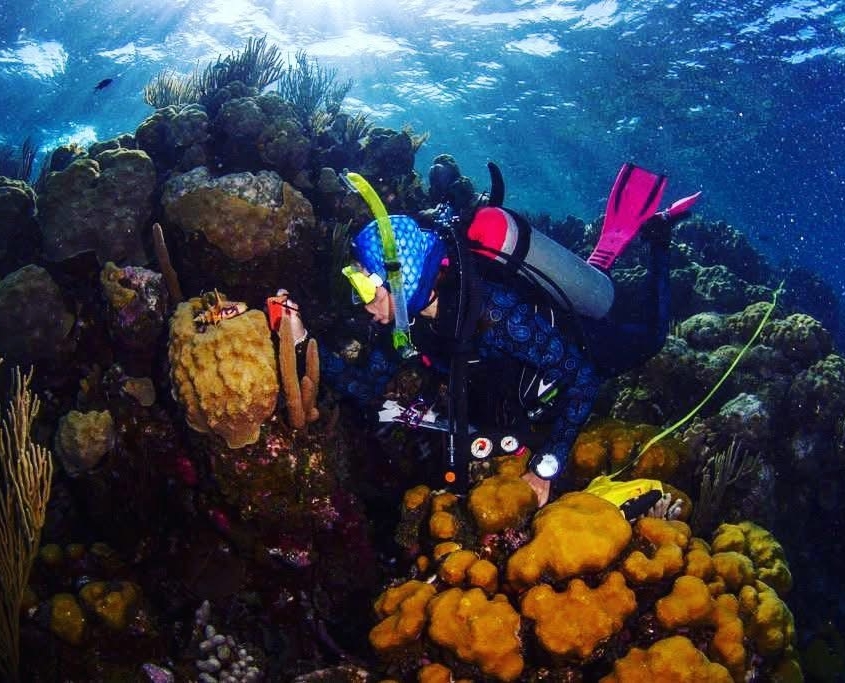
The intersection between science, species recovery, and community empowerment makes me feel most hopeful. Working with Acropora palmata, a critically endangered reef-building coral, has been both heartbreaking and deeply motivating. After decades of monitoring reefs in the Seaflower Biosphere Reserve, I witnessed the dramatic decline of this species, culminating in near-total losses after the 2023 mass bleaching event. Yet, even in this context of loss, small pockets of surviving colonies remain—and they represent hope. What keeps me going is knowing that these remnant corals hold irreplaceable genetic diversity and potential resilience. Being able to identify, protect, and use this diversity to inform restoration and conservation strategies gives meaning to the long hours underwater and behind data analyses. Every surviving colony is not just a data point, but a future possibility for reef recovery. Equally important to me is the work with local communities, especially fishers, divers, and students. Seeing people who once viewed reefs only as a resource now become active stewards—participating in monitoring, restoration, and education—fills me with optimism. These shared efforts have strengthened local ownership of conservation and demonstrated that science can be a bridge rather than a barrier. Ultimately, what gives me hope is the realization that even in highly vulnerable island systems, knowledge, collaboration, and commitment can still create pathways for resilience. Protecting corals is not only about saving an ecosystem—it is about safeguarding culture, livelihoods, and a future where both people and oceans can thrive.
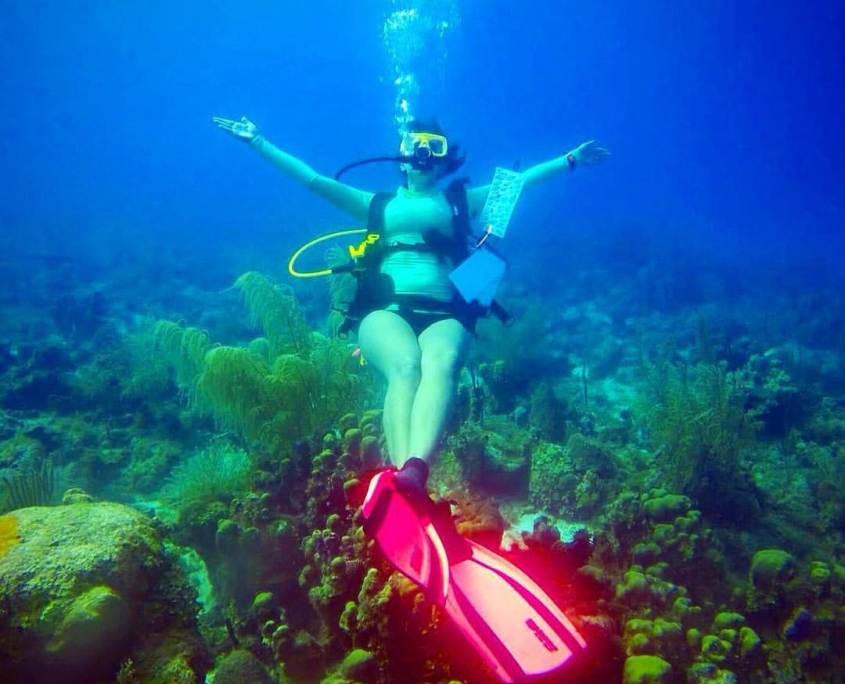
What are some of the most significant challenges women or girls face in science in your context?
In my context—marine science in small island territories and in Latin America—women and girls face multiple, interconnected challenges that go beyond access to education. One of the most persistent barriers is structural inequality: fewer funding opportunities, limited long-term positions, and the expectation that women must continuously prove their competence in male-dominated scientific and field-based environments. In marine and fisheries science specifically, fieldwork remains highly gendered. Women often face skepticism regarding their physical capacity to dive, work long hours at sea, or lead research teams, especially in remote or challenging conditions. These biases are subtle but cumulative, affecting leadership opportunities, authorship, and professional recognition. Another major challenge is visibility and representation. In island and peripheral regions, women scientists—particularly those working locally rather than in large international institutions—are often overlooked despite their deep contextual knowledge and long-term commitment. This lack of visibility can limit access to networks, mentorship, and decision-making spaces where conservation priorities are defined. Finally, women frequently carry a disproportionate burden of caregiving and community responsibilities, which can slow academic trajectories in systems that still reward uninterrupted productivity. Without flexible structures, mentorship, and institutional support, many talented women are pushed out of science at critical stages. Despite these challenges, I also see growing resilience. When girls and young women encounter scientists who look like them—working in the ocean, leading projects, and shaping policy—it expands what they believe is possible. Creating inclusive scientific cultures, valuing local leadership, and supporting women beyond token representation are essential steps toward lasting change.
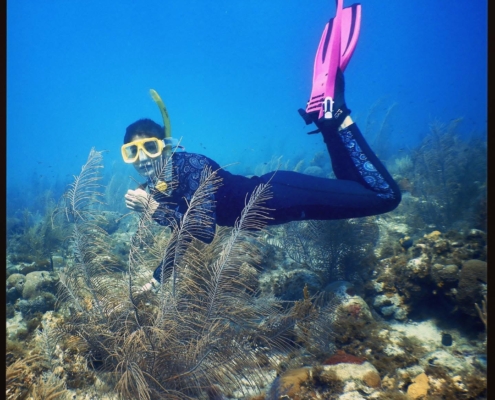
What support, opportunities, or conditions have helped you (or others) succeed despite these challenges?
Several forms of support have been essential to my ability to persist and grow in science. First, strong mentorship has played a critical role. Working with committed advisors and senior scientists who trusted my leadership, valued my ideas, and encouraged independence—especially in field-based research—gave me both confidence and direction at key moments in my career. Equally important have been scholarships and competitive research grants, which provided not only financial stability but also validation. Access to funding allowed me to conduct long-term monitoring, develop independent projects, and remain engaged in conservation work within my home region rather than having to leave in search of opportunities elsewhere. Institutional support and networks have also been vital. Being part of universities, scientific societies, and regional collaborations created spaces for learning, exchange, and visibility. International conferences and fellowships helped me connect local research to global conversations, while regional networks strengthened peer support and collaboration—especially among women in marine science. Beyond formal structures, community trust and collaboration have been fundamental. Support from fishers, divers, local organizations, and students transformed my work into a shared effort. Feeling that the science mattered to people on the ground—and that it could inform real decisions—has been one of the strongest motivators to continue. Finally, success has been sustained by environments that value flexibility, empathy, and inclusion. Science thrives when institutions recognize diverse career paths, respect life circumstances, and actively support women through mentorship, representation, and leadership opportunities. These conditions not only retain women in science, but allow them to lead, innovate, and inspire others.
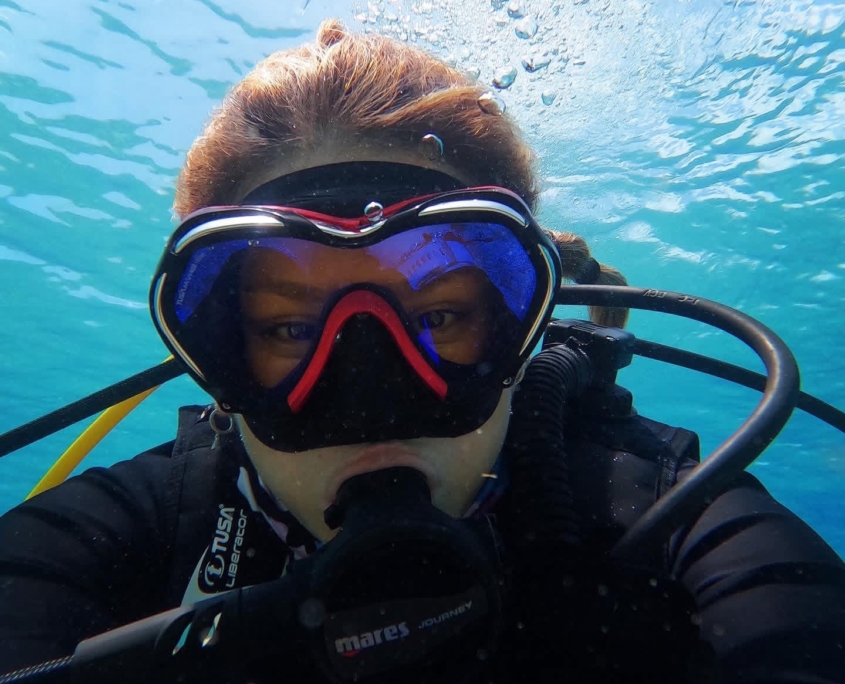
What is one way organizations like GCFI could help women and girls feel more welcome, supported, or visible in fisheries and marine science?
One powerful way organizations like GCFI could support women and girls in fisheries and marine science is by creating sustained mentorship and visibility pathways—not just opportunities, but continuity. This means intentionally pairing early-career women and girls with mentors across generations, disciplines, and regions, while also ensuring that women are visible as leaders, speakers, and decision-makers—not only as participants. Structured mentorship programs linked to conferences, working groups, and publications would help transform short-term engagement into long-term professional growth. Equally important is recognizing and elevating women working at local and regional levels, especially in island and coastal communities, whose expertise is often underrepresented despite its depth and relevance. By actively amplifying these voices—through panels, awards, and leadership roles—organizations like GCFI can reshape who is seen as an expert and who belongs in marine science. When women see themselves reflected in leadership, research, and policy spaces, it sends a powerful message: their knowledge matters, their presence is valued, and their future in science is possible.
Is there a woman in science, locally or globally, whose story has inspired you?
Sylvia Earle; Sandra Bessudo
What message would you share with girls considering a career in science or fisheries, especially those who may doubt they belong?
To any girl considering a career in science or fisheries—and wondering whether she belongs—I would say this: your curiosity is already enough to begin. You do not need to look a certain way, come from a particular place, or follow a straight path to belong in science. The ocean needs many voices, perspectives, and ways of knowing. There will be moments of doubt, and there may be spaces where you feel invisible or underestimated. When that happens, remember that your background is not a limitation—it is a strength. Your connection to your community, your lived experiences, and your questions about the world are exactly what science needs to grow more just, creative, and relevant. Science is not only built in laboratories or institutions—it is built in the field, in conversations with fishers, in long days at sea, and in the persistence to keep going even when answers are slow to arrive. Seek mentors, build community, and allow yourself to take up space. You do not have to do this alone. Most importantly, trust that you belong not because someone allows you to, but because the future of science depends on you being there.