
 What first drew you to science, fisheries, or the ocean?
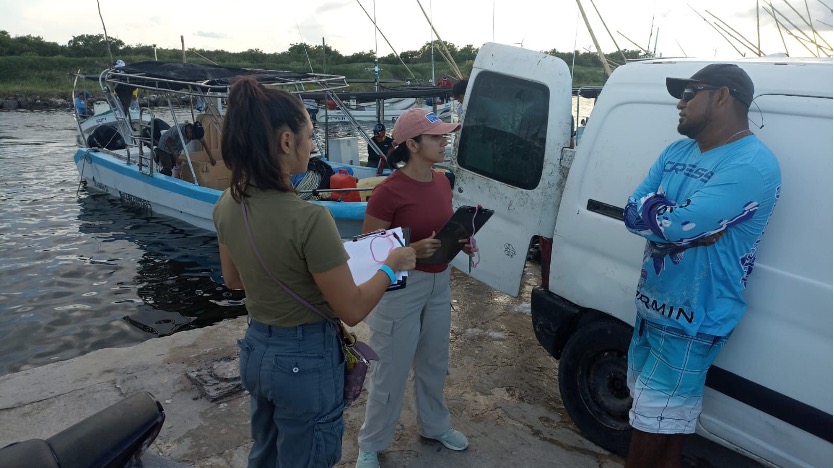
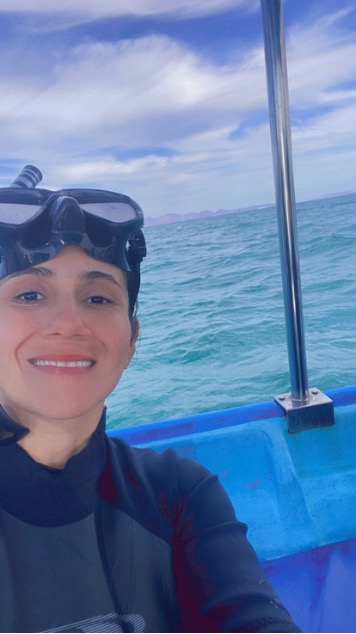
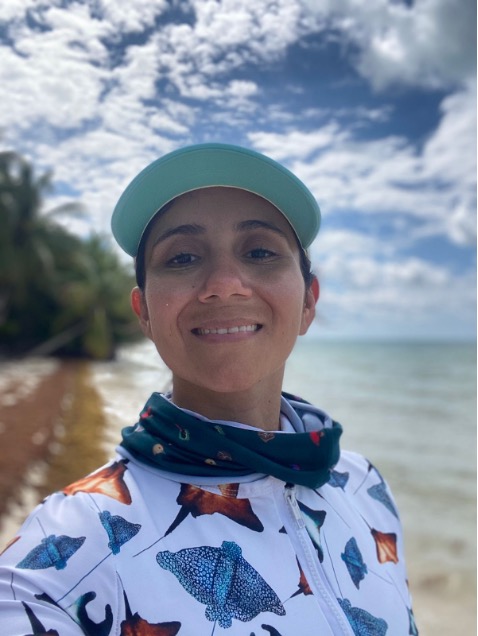
My interest in marine environments grew naturally, as I come from Campeche, a coastal city deeply connected to the ocean and its challenges. Seeing the environmental and social issues faced by fishing communities often overlooked compared to other sectors motivated me to focus on marine and fisheries-related science as a way to make these realities more visible.
What part of your work makes you feel proud or hopeful?
I’m particularly enthusiastic about the communities I’ve visited in Mexico that are working to create sustainable spaces within their communities to conserve their marine resources, such as the community of Punta Allen in Quintana Roo.
What are some of the most significant challenges women or girls face in science in your context?
I believe that, for women, some of the greatest challenges stem from a lack of openness to independent learning and from deeply ingrained fears that limit both our intellectual development. These fears are often shaped by social expectations and structural barriers that discourage women from fully exploring their potential or pursuing what truly inspires them. In this sense, the most significant challenge lies within ourselves: overcoming self-doubt, claiming space, and trusting our capacity to grow and lead. At the same time, broader societal challenges persist, particularly the need to build greater tolerance
What support, opportunities, or conditions have helped you succeed?
It has helped me believe in myself, develop new skills in a short period of time, and transform challenging situations into opportunities that were not previously available to me. Through this process, I have also strengthened my intellectual growth and confidence.
What is one way organizations like GCFI could help women and girls feel more welcome, supported, or visible in fisheries and marine science?
GCFI could contribute by expanding student scholarship opportunities and promoting training courses for women, particularly in areas with limited resources or restricted access to science education.
Is there a woman in science, locally or globally, whose story has inspired you?
Dr. Evelia Rivera, from Campeche, Mexico, is one of the women I admire most for her professional career. She is deeply committed to her studies and naturally inspires others to fight for women in science.
What message would you share with girls considering a career in science or fisheries, especially those who may doubt they belong?
Doubt is a common part of the journey, but it does not define your ability or your potential. Science and fisheries need diverse voices, experiences, and ways of thinking. Trust your curiosity, stay connected to what inspires you. Your perspective matters, and your presence can help transform these fields for the better.