
 What first drew you to science, fisheries, or the ocean?
I was drawn to the ocean before I ever thought of it as science. As a child in Grenada, I simply loved the beach — I loved it so much that I would literally pray for my parents to take me there. The sea was a place of joy, peace, and wonder for me long before it became a place of work.
As I grew older, I realized that this place I loved so deeply was not guaranteed. Understanding how vulnerable our marine ecosystems are — and how closely they are tied to food security and livelihoods — made this path feel important. Fisheries science gave me a way to protect what I loved, while supporting the people and communities who depend on it.
What part of your work makes you feel proud or hopeful?
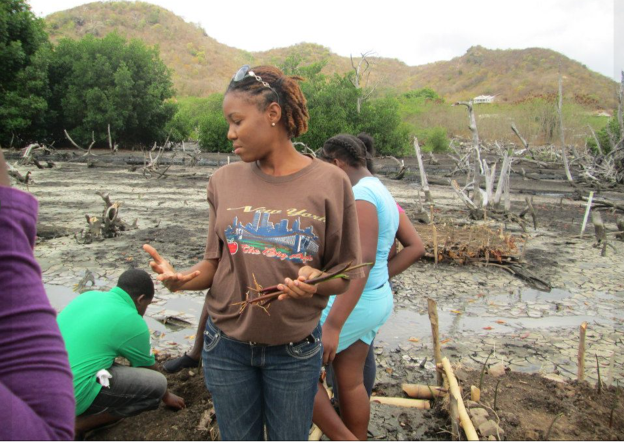
One of the things that makes me most proud is the mangrove restoration work I volunteered in at the Woburn mangroves back in 2013, part of the Woburn–Clarkes Court Marine Protected Area. Seeing that area now flourishing is deeply meaningful — especially knowing that the propagules planted there are now full-grown mangrove trees, actively protecting our coastline and providing habitat that supports fisheries.
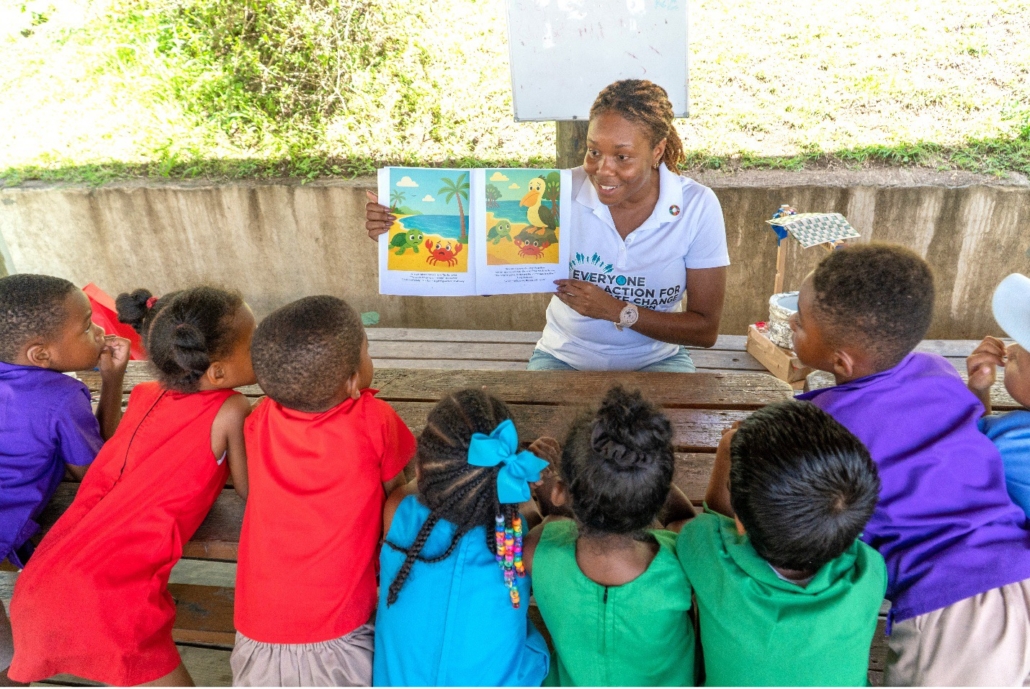
What makes it even more special is that elementary students I was teaching at the time helped plant those mangroves. Watching their small contributions grow into real, living defenses for our land gives me so much hope.
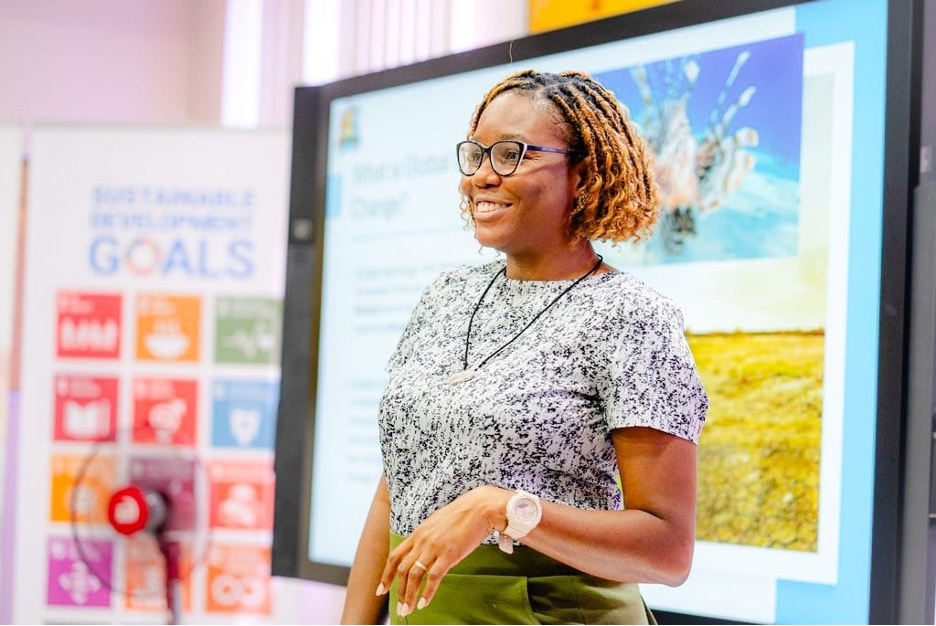
I also feel inspired by moments in teaching — like when I was a Faculty Member with the Department of Biology, Ecology and Conservation at St. George’s University and taking students into the field, or unexpectedly hearing former students especially those not in the field, like Business students once speaking on the radio about what they learned in my Biology and Diversity of Life course. Those moments remind me that impact often shows up quietly, and sometimes long after the lesson ends.
 What are some of the most significant challenges women or girls face in science in your context?
Women and girls in science often face limited funding, scarce opportunities for advancement (in the Caribbean context), and unclear pathways for career progression. These structural barriers can be deeply discouraging, especially when combined with cultural expectations around caregiving and the pressure to choose more “practical” careers, making it harder for women to enter, remain in, or lead within scientific fields.
What support, opportunities, or conditions have helped you succeed?
Access to scholarship opportunities in Canada and Sweden played an important role in my academic journey, but the foundation of my success was the support around me. My professional network at St. George’s University provided mentorship, encouragement, and connections that opened doors and sustained me along the way.
Equally important was my family, especially my mother. While I was completing the second half of my PhD in Sweden, she relocated with me for nearly a year to help care for my daughter. That level of support made it possible for me to continue my studies and succeed during a very demanding period of my life.
 What is one way organizations like GCFI could help women and girls feel more welcome, supported, or visible in science?
Creating funded mentorship and training pathways that lead to real opportunities for advancement.
What message would you share with girls considering a career in science or fisheries, especially those who may doubt they belong?
Always take a chance on an opportunity. Sometimes you may feel like you’ll never get through, but by saying no, you remove your chances completely. By trying, at least you give yourself a chance (whether 50/50 or 1/100) — and that matters. If it doesn’t work out, that’s okay. But if it does? That one decision can open doors you never imagined. Take the chance.