
 What first drew you to science, fisheries, or the ocean?
I don’t remember a single defining moment. It was more something that slowly grew with me. My mother was a science teacher, and growing up on an island meant that every time we went outside, she was explaining what we were seeing: geology, biology, how ecosystems work. That curiosity stayed with me.
Living on an island also made the ocean impossible to ignore. I quickly understood its importance, but there’s also a very personal connection. The ocean is where I swim, surf, relax, it’s a place of beauty and calm. That emotional bond is a big part of why it matters so much to me.
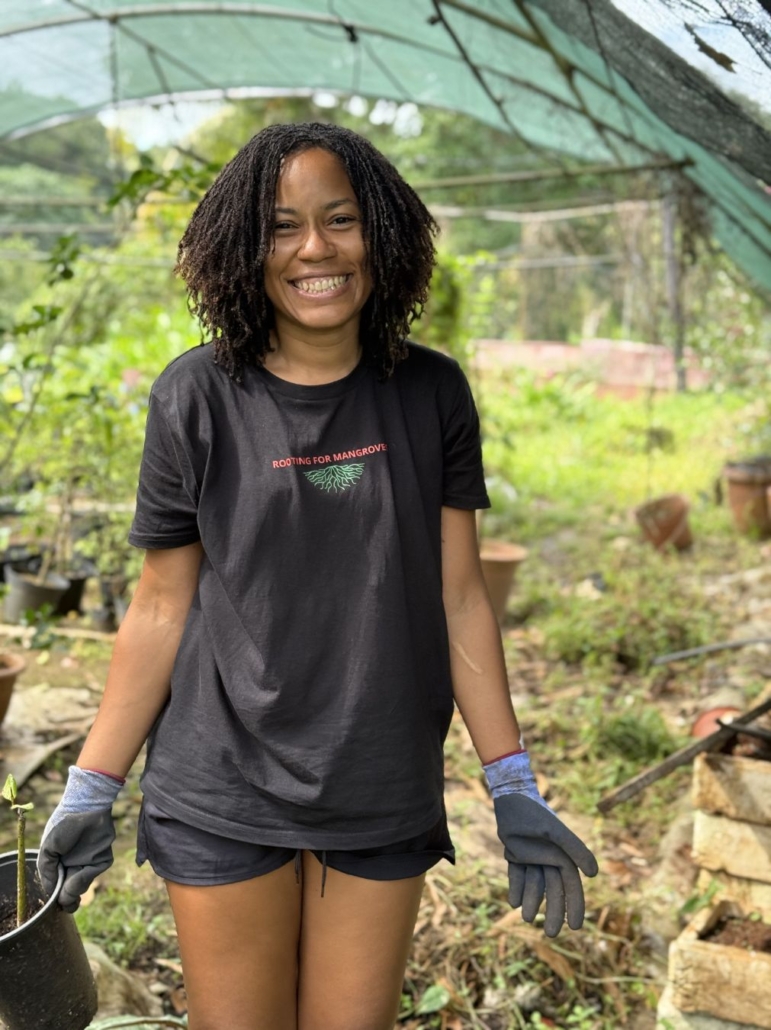
In high school, I loved science classes and initially wanted to become an ecotoxicologist, because I’ve always believed that preventing pollution is better than trying to fix damage after it’s done. That belief still guides my work today. At Roots of the Sea, when I design outreach activities, my goal is to help people see how beautiful, useful, and essential our environment is. Because once people truly see that, protecting it becomes natural.
What part of your work makes you feel proud or hopeful?
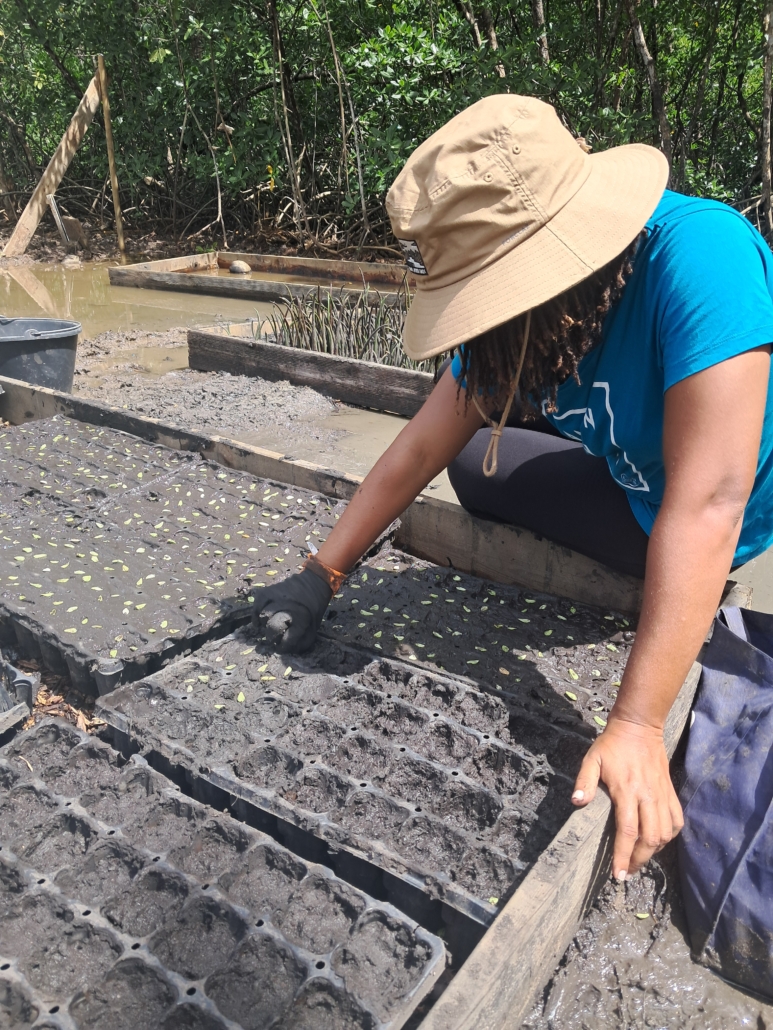
I feel hopeful when I see the growing demand from schools and organizations to take part in mangrove discovery and restoration activities. It shows a real interest from the community.
What really stays with me is seeing participants leave with a different perspective on these ecosystems : more curiosity, more respect, and often a sense of responsibility.
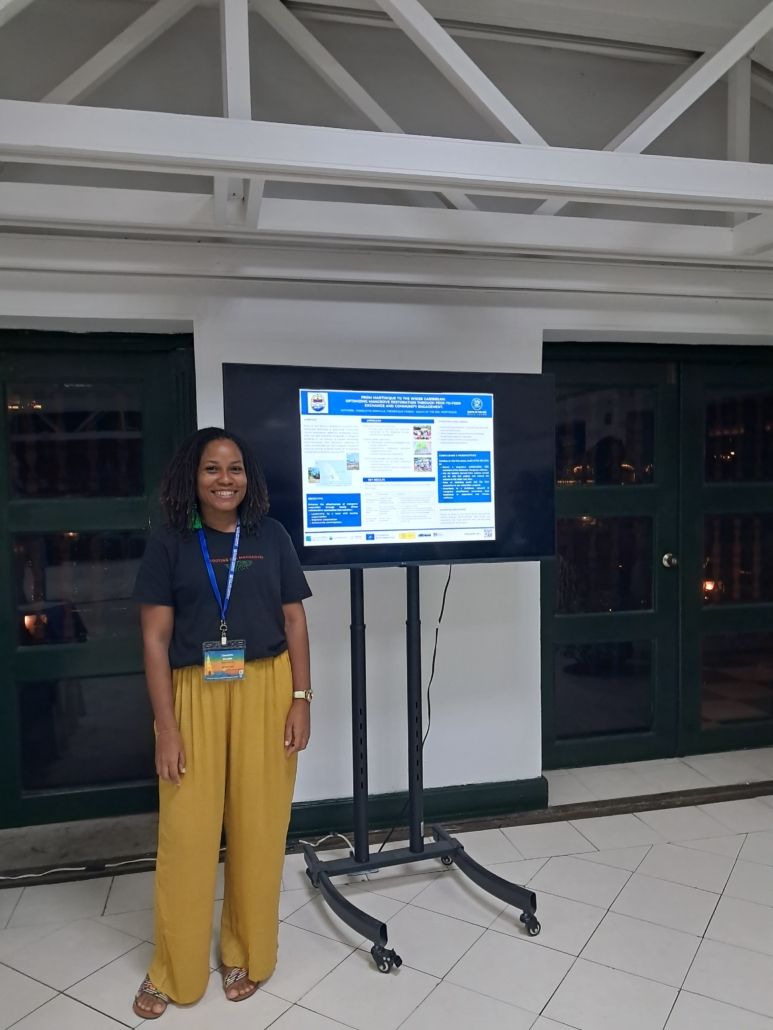
I also feel encouraged when I attend conferences and meet others doing similar work. Being surrounded by people who share the same values reminds me that I’m part of a broader, committed community, and that collective energy is motivating.
What support, opportunities, or conditions have helped you succeed?
Supportive teachers, a family that encouraged curiosity, good advice at key moments, and the financial means to attend engineering school all played an important role.
What is one way organizations like GCFI could help women and girls feel more welcome, supported, or visible in fisheries and marine science?
By consistently sharing women’s stories, highlighting one woman in science every week, for example. Visibility matters, and seeing real, diverse role models helps make these careers feel accessible and achievable.
What message would you share with girls considering a career in science or fisheries, especially those who may doubt they belong?
You belong wherever you choose to be!