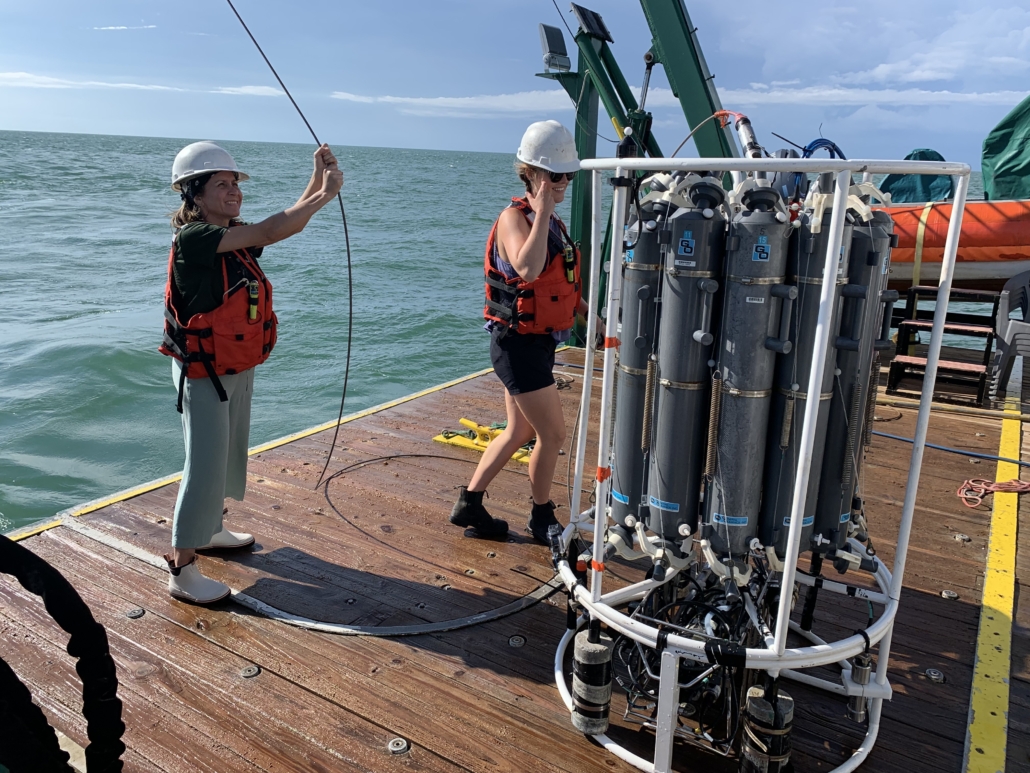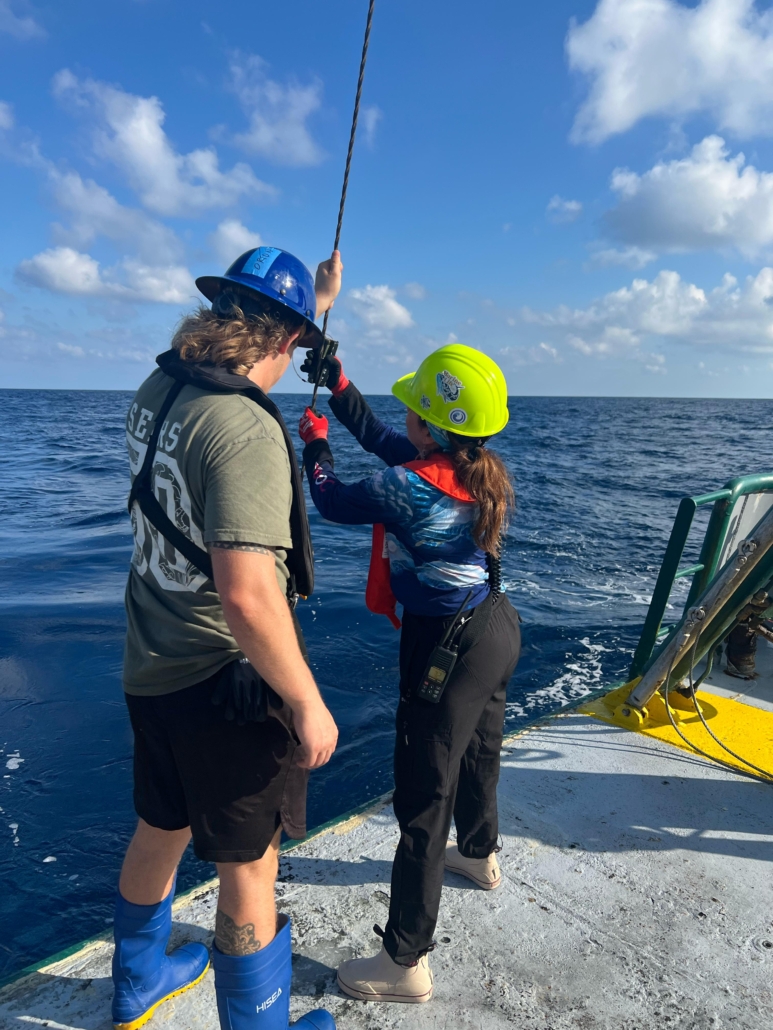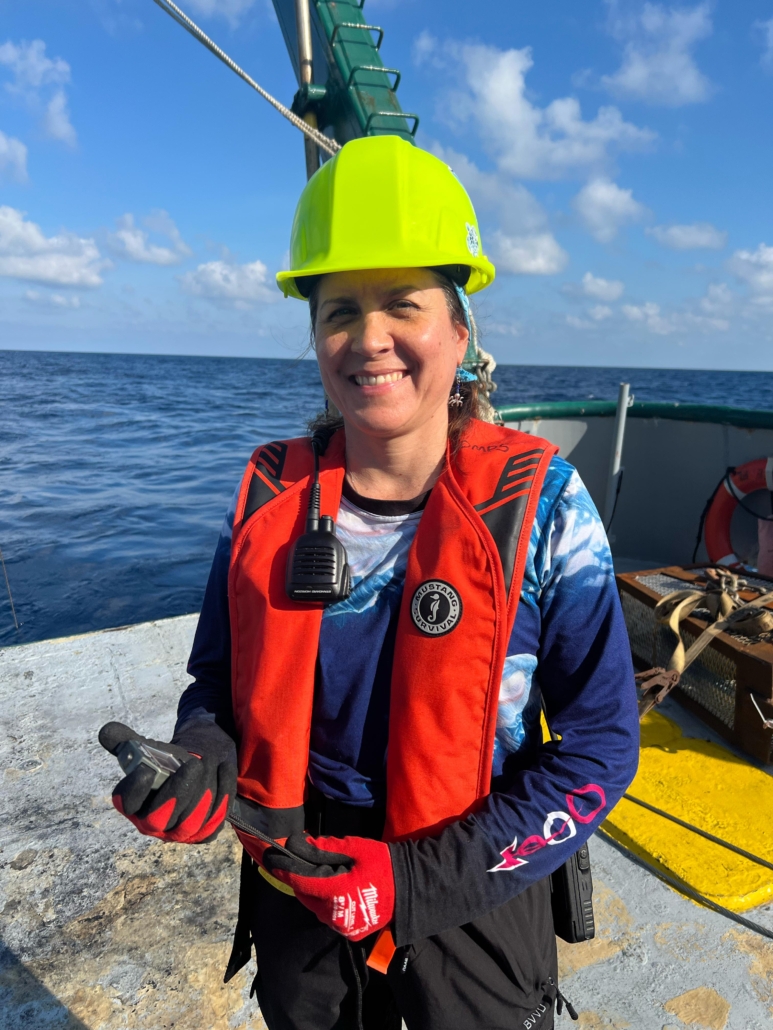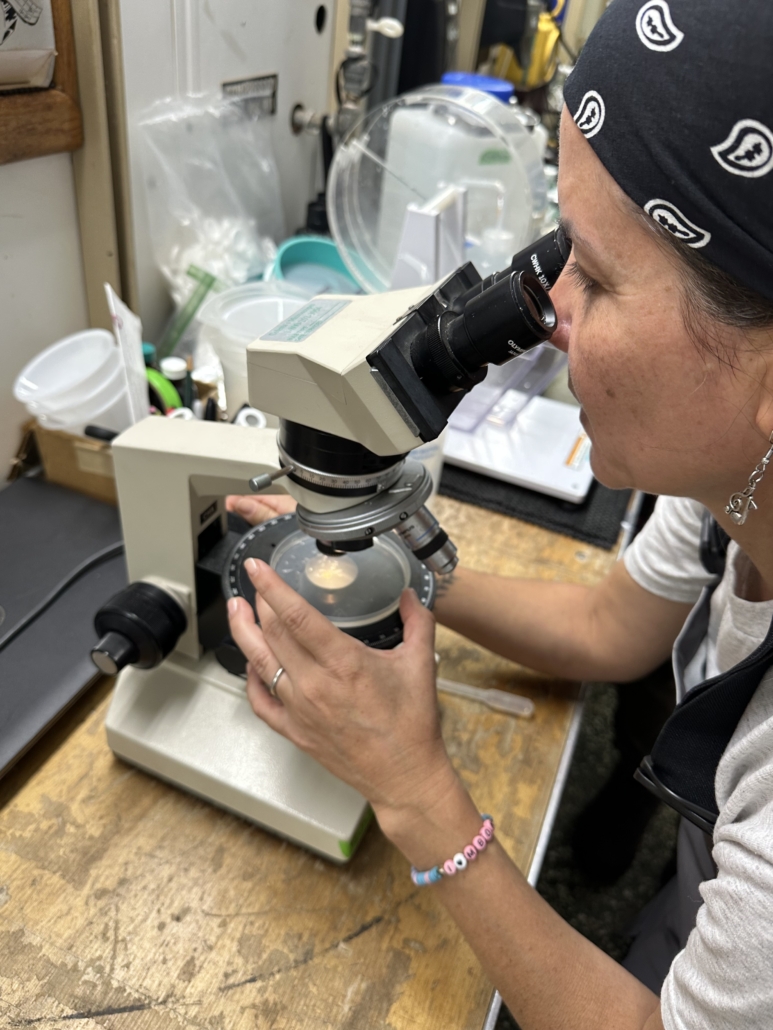

 What first drew you to science, fisheries, or the ocean?
When I was a kid, I use to visit the beach with my family for recreational purposes and I always wanted to know more about what is below the surface of the water. I felt attracted to discover the mystery of life in the ocean. Later on, when I have the option to study a professional career, I was deciding between options that would need me to be in the nature, close to animals and plants. Moreover, I discovered that Biology explains a lot about why the nature is how it is and that is how I got to study Biological Science and then I specialized in Marine Biology. Nowadays I still go to the beach with my family and I see the ocean differently, with more respect and admiration. It all starts with observing your surrounding and asking yourself questions, that’s the foundation of how science works. The scientific method is built on careful observation, curiosity, and developing strategies to find answers. Along the way you learn to place this process in service of the broader community, using knowledge not just to understand the world, but to contribute to making it better.
What support, opportunities, or conditions have helped you (or others) succeed despite these challenges?
A solid support from mentors (e.g. grad school, Postdocs) is fundamental. Then, joining Capacity Development programs withing global organizations like NANO-POGO and OBIS are key in strengthening professional development and building network. Been engaged with community of practices in your research area provides mutual benefits and definitely help your career to grow.
Is there a woman in science, locally or globally, whose story has inspired you?
Since I was a teacher for undergrads at the university, I was inspired by Sylvia Earle. Her passion and energy pushes me to keep working. I respect a lot her efforts in translating scientific knowledge into community benefits; her efforts put in education, strategic communication for connecting people with the ocean is admirable. Also I’m very inspired by Jane Goodall. In spite of her work being from a different science field, the take-home-messages she delivers applies to any environment and we have a lot to learn from her.
What message would you share with girls considering a career in science or fisheries, especially those who may doubt they belong?
Historically women in many parts of the world have long been connected to the ocean through traditional coastal gathering practices. Across numerous coastal regions, women are responsible for collecting, cleaning, and preparing marine products such as mollusks for sale. These roles reflect practical knowledge, vision of resilience, and a deep understanding of marine resources. Women have the same ability and strength to pursue scientific careers as anyone else, and those who choose this path can make meaningful contributions to science and society.