
 What first drew you to science, fisheries, or the ocean?
I was born on a small French Caribbean island, Guadeloupe. Growing up surrounded by water naturally gave me an unconditional love for the ocean and its inhabitants. My other passion has always been animals. So I wanted to combine my two passions in my career plan. There was no specific moment when I realized that this was my path, because it has always been a part of me.
What part of your work makes you feel proud or hopeful?
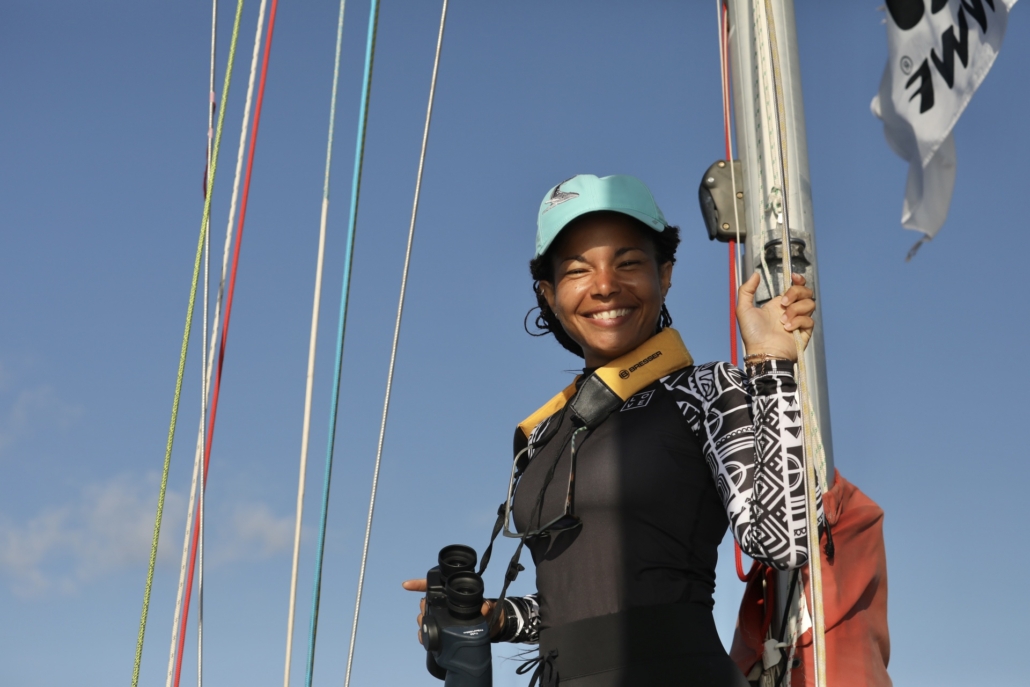
Many aspects make me proud, but I think that contributing in my own small way to the conservation of marine mammals and helping local communities become aware of the treasure trove of marine biodiversity we are fortunate to have in the Caribbean is a great source of pride and a privilege. Furthermore, I am a scientist: I am curious, and the fact that my work helps shed light on certain questions is extremely stimulating.
What are some of the most significant challenges women or girls face in science in your context?
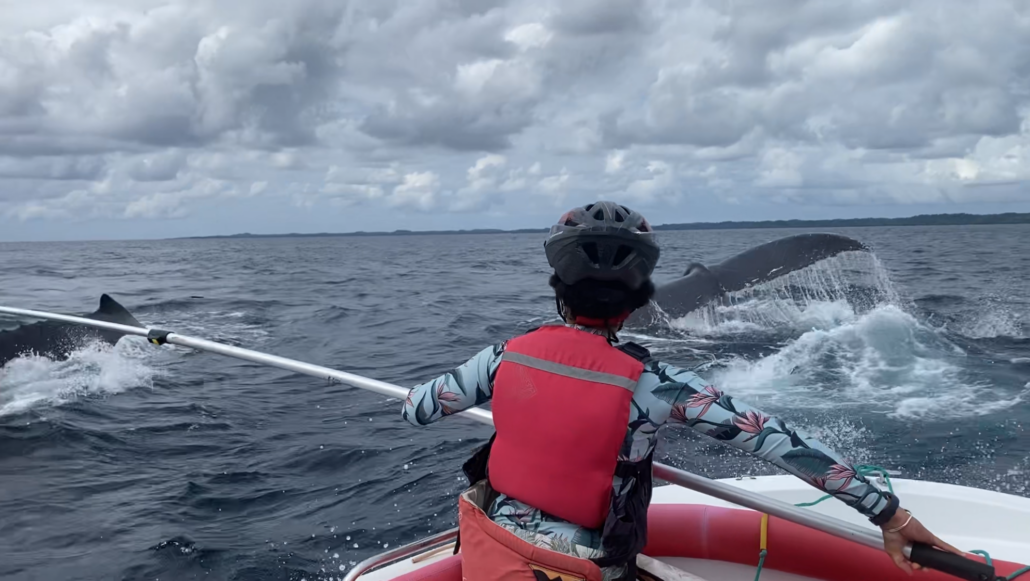
It is difficult to be taken seriously and to have access to certain training courses or field protocols that are considered very physical or challenging. I am thinking in particular of the task of attaching multisensor tags to baleen whales, for example.
What support, opportunities, or conditions have helped you succeed?
I was extremely lucky to meet the right people at the right time. I had the opportunity to spend a year doing a series of laboratory and field internships, which allowed me to meet the right people who trusted me and opened the doors to numerous training opportunities and experiences. It took a lot of hard work and dedication on my part, but these encounters were also decisive for the work I am currently doing.
What is one way organizations like GCFI could help women and girls feel more welcome, supported, or visible in fisheries and marine science?
There could be dedicated workshops or meeting spaces to facilitate exchanges with prominent figures from different backgrounds. Financial support for training and projects is also an avenue worth exploring.
Is there a woman in science, locally or globally, whose story has inspired you?
This is an easy answer, but Jane Goodall is an inspiration to me, as is Sylvia Earle. Jane Goodall began her work at a time when science was largely inaccessible to women and formal scientific training was considered essential. Despite this, she transformed our understanding of chimpanzees through her patience, careful observation and determination. Her groundbreaking research revealed their complex social behaviours and use of tools, redefining the field of primatology. Today, she is also a leading figure in conservation and animal welfare, inspiring generations to protect wildlife and the natural world.
Sylvia Earle grew up at a time when women had very limited access to scientific careers, but she refused to give up. Through her determination and resilience, she overcame these obstacles and helped pave the way for future generations. Today, she is recognised as a pioneering oceanographer, aquanaut and author of more than 180 books on marine science and technology. During her career, she has led more than 100 expeditions and spent more than 7,000 hours below the ocean’s surface.
What message would you share with girls considering a career in science or fisheries, especially those who may doubt they belong?
No dream is too big if you put your heart and effort into it. All those who have done great or important things started with one step and continued after the first, second, fifteenth obstacle they faced.