
What first drew you to science, fisheries, or the ocean?
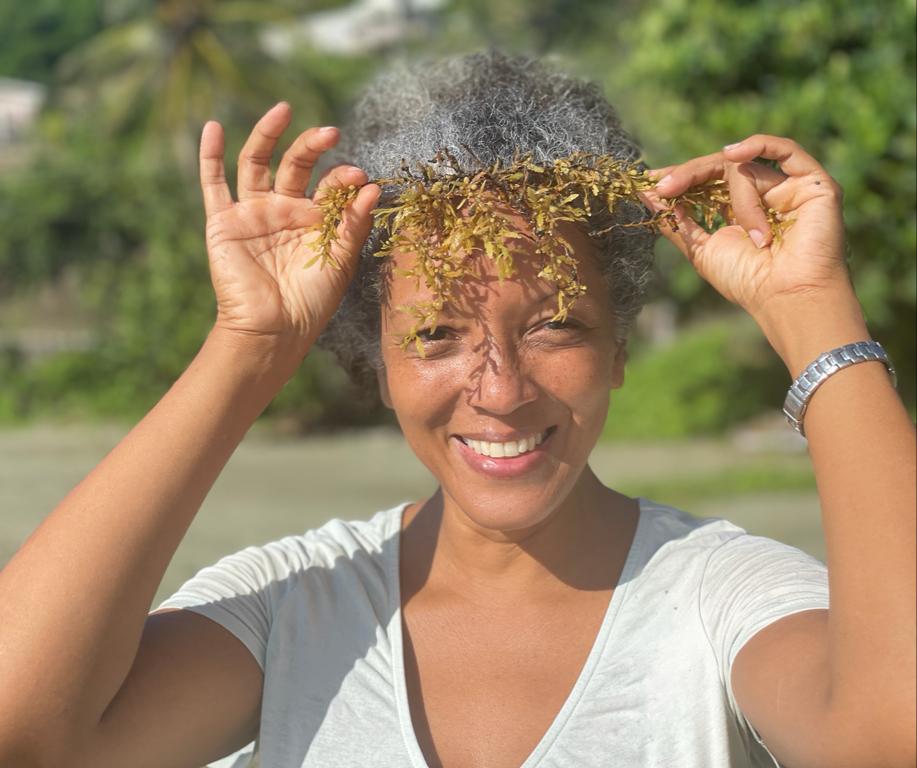
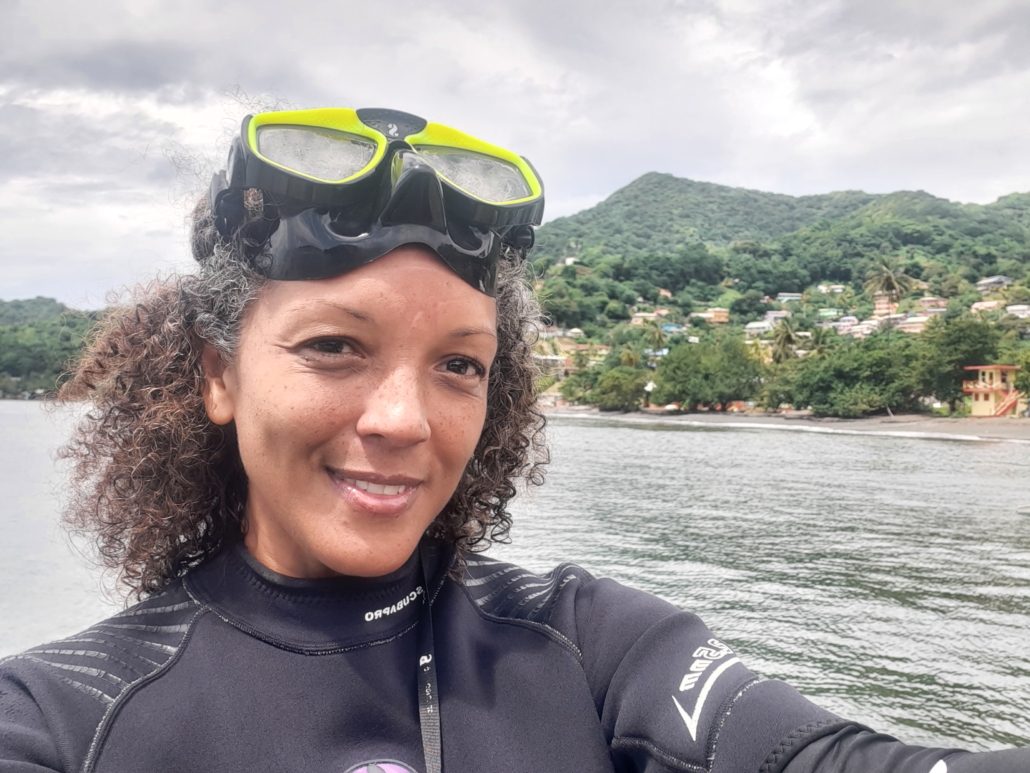
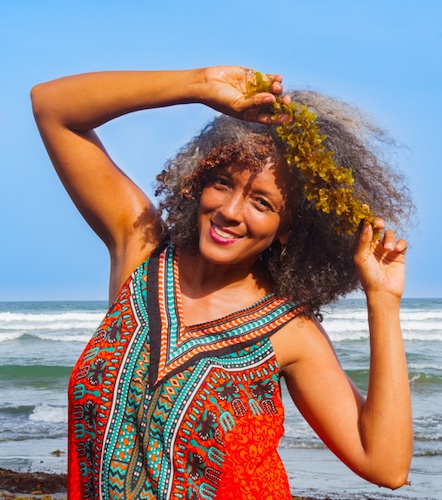
In high school I failed all the science subjects but excelled in languages. The irony is that while serving as a conference interpreter in 2021, I discovered the exciting science of sargassum seaweed. I was intrigued by the findings shared by global researchers. I learnt of the benefits of sargassum and that birthed the concept of Spargassum: Trinidad and Tobago’s first line of sargassum infused cosmetics.
What part of your work makes you feel proud or hopeful?
I am particularly proud of having launched this line of sargassum infused products with my former business partner. I went from being clueless in science class to grasping the science of sargassum, how to harvest, preserve, transform and market this seaweed which is largely considered as a nuisance. I’m proud to be a citizen scientist and pioneer in the emerging sargassum sector in Trinidad and Tobago.
What are some of the most significant challenges women or girls face in science in your context?
Being a self-taught citizen scientist who bloomed in my forties, it is a challenge to be taken seriously by the academically trained scientists. Yet I would argue that a great scientist starts by observing her surroundings, identifying a problem, testing her hypotheses and crafting signature solutions.
What support, opportunities, or conditions have helped you succeed?
I was blessed to have grant and technical support opportunities to help take the concept of sargassum infused spa products from ideation to creation and production to exportation.
What is one way organizations like GCFI could help women and girls feel more welcome, supported, or visible in fisheries and marine science?
Networking opportunities to meet and get to know other women scientists are a great source of motivation.
Is there a woman in science, locally or globally, whose story has inspired you?
Dr. Rahanna Juman of the Institute of Marine Affairs in Trinidad and Tobago has been a great inspiration to me. I had the opportunity to observe her passion, perseverence and professionalism in mangrove and coastal ecosystems research while I worked at the IMA in 2006. Fastforward to her work with the national sargassum steering committee where she shares her vast expertise and continues to advocate for sustainable use and development of this emerging natural resource.
What message would you share with girls considering a career in science or fisheries, especially those who may doubt they belong?
If you doubt that you belong in science and fisheries, that’s the perfect starting point for the long and scenic route meandering around with your intellectual curiosity till you find yourself intrigued by some small detail of a huge scientific discovery.